The Nap That Launched a Movement: How One Worker's Stolen Rest Changed American Workplaces Forever
Twice a day, millions of Americans do the same thing without thinking twice about it. They push back their chair, walk to the break room, pour themselves a coffee, and breathe for a few minutes. It feels like nothing. It feels like always.
It wasn't always. And it definitely wasn't nothing.
The coffee break — that small, sacred pause in the American workday — has a beginning. And like most things worth knowing about, it started with someone doing something they absolutely were not supposed to do.
The Factory Floor in the 1920s Was Not a Relaxing Place
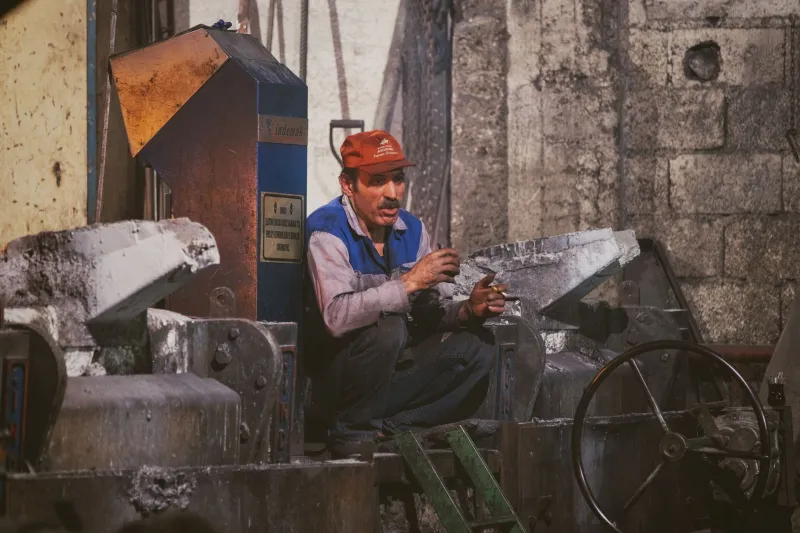
To understand how the coffee break came to exist, you have to understand what American factory life looked like a hundred years ago. Shifts were long. Management was close. The idea that a worker might stop what they were doing for any reason other than an emergency — let alone to rest — was not just frowned upon. It was a fireable offense.
American industrial culture in the early twentieth century was built on the philosophy of Frederick Winslow Taylor, the efficiency expert who essentially argued that human workers should function as cleanly as machine parts. Every minute of the workday had a purpose. Every pause was waste. Workers were expected to arrive, produce, and leave — with lunch as the only socially tolerated interruption.
So when workers in various factories across the Midwest began quietly disappearing for ten or fifteen minutes mid-shift — sometimes to grab a cup of coffee from a nearby cart, sometimes just to sit somewhere quiet for a moment — it wasn't just a habit. It was a small, quiet act of resistance.
The Thermos Companies Saw an Opportunity
Here's where the story gets interesting. While factory managers were busy treating these unauthorized breaks as a discipline problem, a handful of American businesses were watching the same behavior and seeing something else entirely: a market.
Coffee cart operators started appearing outside factory gates in industrial cities across the country through the 1920s and into the 1930s. Thermos manufacturers began marketing directly to working-class consumers. And perhaps most importantly, the Pan-American Coffee Bureau — a trade organization funded by South American coffee producers — launched an aggressive advertising campaign in the early 1950s explicitly promoting the idea of a "coffee break" as a healthy, productive workplace ritual.
The campaign was remarkably savvy. Instead of selling coffee to individuals, it sold the concept of the break itself to employers. The pitch was essentially: your workers are going to rest anyway. Give them a structured moment to do it with coffee, and they'll come back sharper. Productivity won't fall. It'll rise.
And here's the thing — it worked. Not just as advertising, but as actual workplace science. Studies conducted in the 1940s and 50s began confirming what tired factory workers had known instinctively for decades: short, regular breaks improved output, reduced errors, and kept workers from burning out before the end of a shift.
Labor Unions Made It Official
By the late 1940s, the coffee break had moved from informal habit to active negotiating point. American labor unions, which had been steadily gaining power through the New Deal era, recognized that formalizing the break in collective bargaining agreements was both practically valuable and symbolically important.
It was a way of saying: your time matters. Your body matters. You are not a machine.
The 1952 contract negotiations in several major manufacturing sectors included explicit language guaranteeing workers two paid fifteen-minute breaks per shift — one in the morning, one in the afternoon. Companies that resisted found themselves on the wrong side of both union pressure and public opinion. In the postwar economic boom, with workers in genuine demand and labor organizing at its peak, the coffee break became something employers couldn't easily take away.
The federal government eventually weighed in too. The Department of Labor issued guidance clarifying that short rest breaks — generally under twenty minutes — must be counted as paid work time under the Fair Labor Standards Act. What had started as one worker sneaking off to catch their breath was now written into federal labor policy.
Corporate America Eventually Embraced What It Couldn't Stop
By the 1960s, the coffee break had completed its transformation from act of rebellion to corporate institution. Companies weren't just tolerating it — they were building infrastructure around it. Break rooms appeared in office buildings. Vending machines arrived. The institutional coffee maker became a fixture of American professional life as recognizable as the filing cabinet or the fluorescent light.
Advertisers leaned in hard. Maxwell House. Folgers. Hills Bros. All of them built campaigns around the ritual of the workplace coffee break, cementing it as a cultural touchstone. The image of colleagues gathered around a percolator, sharing a few minutes away from their desks, became shorthand for American professional normalcy.
What nobody mentioned in those cheerful ads, of course, was that the whole thing had started with workers taking breaks they weren't supposed to take — and eventually demanding the legal right to keep taking them.
The Break That Never Really Stopped
Today the coffee break looks different than it did in 1952. It's a walk to the cold brew tap in a tech startup's open kitchen. It's a Slack message saying "grabbing a coffee, back in ten." It's a solo trip to the Starbucks two blocks from the office.
The form has changed. The function hasn't.
Every time you step away from your screen for a few minutes — every time you give yourself permission to not be productive for a moment — you're participating in something that took decades of human stubbornness and labor organizing to establish. Someone had to fight for your right to pause.
It began, as most things do, with someone just too tired to keep going without a break. And eventually, the whole country caught up.