The Real Reason You Shake Hands — and It Has Nothing to Do With Being Friendly
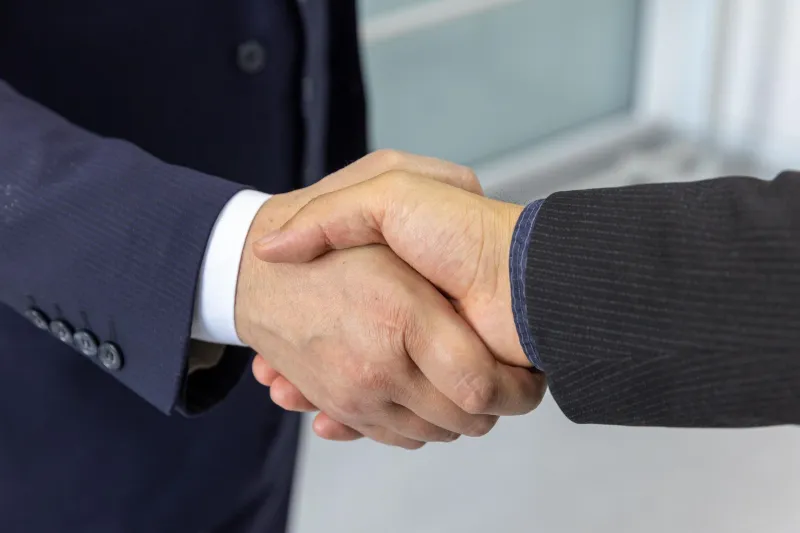
Somewhere today, you'll probably shake someone's hand. A job interview. A business meeting. A neighbor you haven't seen in a while. You'll reach out, grip, pump once or twice, and move on — and it will feel completely natural, like breathing or blinking. Like something humans just do.
But nobody was born knowing how to shake hands. Somebody, somewhere, started doing it. And the reason they started doing it is a lot more interesting — and a lot more paranoid — than a simple greeting.
It Began With Weapons
The most widely supported origin of the handshake is also the most practical: it was a way to prove you weren't about to stab someone.
In ancient Greece and Rome, when two men met — especially soldiers or strangers — extending an empty right hand was a signal. It meant: no sword. No dagger. I'm not here to kill you. The grip that followed served a second purpose: if the other person had a weapon hidden up their sleeve, the shaking motion was meant to dislodge it.
This wasn't symbolic. It was a genuine security check. Peace, in its earliest physical form, was demonstrated through the absence of a weapon, not the presence of goodwill.
The right hand mattered specifically because most people were right-handed — and most people fought with their right hand. Offering it openly, and gripping the other person's weapon hand in return, was the ancient equivalent of going through a metal detector. Mutual and functional.
The Quakers Changed Everything
For centuries, the handshake existed alongside other greeting customs — bowing, hat-tipping, kneeling — all of which carried strict social meaning about rank and status. You bowed lower to someone more powerful. You removed your hat to show deference. These weren't just pleasantries; they were a visible map of the social hierarchy.
The Quakers, the religious movement that emerged in England in the mid-1600s, rejected all of that. Their belief in the fundamental equality of all people meant they refused to bow, remove their hats, or use honorific titles. They would not perform gestures that implied one person was worth more than another.
Instead, they adopted the handshake as their universal greeting. Equal pressure, equal grip, no one bowing. The handshake, for the Quakers, was a political statement as much as a social one. It said: we are the same, you and I.
This was genuinely radical in seventeenth-century England — and it carried real consequences. Quakers were frequently persecuted for refusing to bow to judges and magistrates. But their practice spread, particularly as Quaker merchants became influential across England and colonial America. When you did business with a Quaker, you shook hands. And because Quaker merchants had a reputation for honesty and fair dealing, the handshake began to carry that association too.
How It Crossed the Atlantic
By the time the American colonies were establishing their own identity, the handshake was already well embedded in Quaker-influenced communities, particularly in Pennsylvania. But it got a significant cultural boost from one of the new country's most visible figures.
George Washington, famously, refused to bow to visitors at his presidential receptions. He felt that bowing was a remnant of European monarchy that had no place in a republic. Instead, he nodded — and shook hands. For a new nation actively constructing its identity around equality and democratic ideals, the handshake fit the narrative perfectly. If the president shook your hand, it meant something.
Throughout the nineteenth century, American politicians embraced the handshake as a campaigning tool. It was democratic theater — the candidate pressing the flesh, meeting ordinary citizens on equal terms. The handshake became synonymous with trustworthiness, with deals made in good faith, with the American promise that status didn't determine your worth.
The Grip We Inherited
The specific form of the handshake we use today — web-to-web, firm but not crushing, a couple of pumps — became standardized largely through business culture in the twentieth century. Etiquette guides and management training manuals spent decades analyzing what a proper handshake communicated. Too limp: untrustworthy. Too aggressive: threatening. The ideal handshake was confident, brief, and equal.
Psychologists have since confirmed what those etiquette writers intuited. Studies show that a handshake at the start of a negotiation increases cooperative behavior. It signals good faith in a way that words alone don't. The ancient weapon-check evolved, over millennia, into a neurological trigger for trust.
What Happened in 2020
The COVID-19 pandemic briefly threatened to end the handshake entirely. Public health officials encouraged elbow bumps and waves. Some commentators declared the handshake was finished.
It wasn't. Within a couple of years, hands were extended across conference tables and baseball dugouts and car dealership floors again, largely unchanged from how they'd been offered for centuries.
That's the thing about a gesture with this much history behind it. It survived the fall of Rome, survived religious persecution, survived the formation of a new country, survived two world wars, and survived a global pandemic. A habit that started as a practical way to check for hidden daggers turned into one of the most loaded gestures in human culture.
Next time you reach out your right hand, you're not just saying hello. You're completing a circuit that goes back thousands of years — to a moment when trust had to be physically demonstrated, because words weren't enough.