Two Baseball Players Looked at Each Other and Invented Something the Whole World Now Does
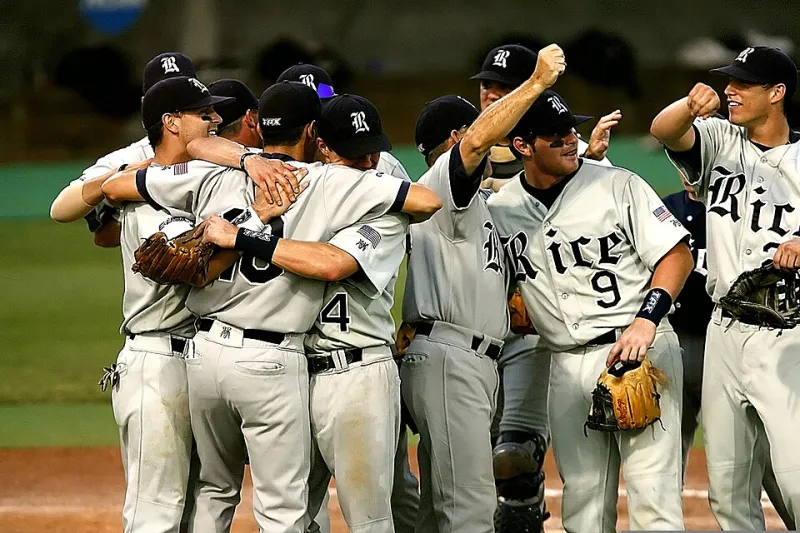
Photo: Keith Johnston on Pixabay, CC0, via Wikimedia Commons
There are gestures so embedded in daily life that questioning their origin feels strange — like asking why we shake hands or why we wave goodbye. The high five is one of those gestures. It's in every locker room, every classroom, every office, every kitchen table where someone just got good news. It's how people say yes without words.
And it's surprisingly young. Depending on how you count, the high five is barely 50 years old. More surprisingly, the moment it was born is almost certainly on film.
The Last Day of the Regular Season, 1977
The Los Angeles Dodgers were having a remarkable year. On October 2, 1977 — the final game of the regular season — outfielder Dusty Baker stepped to the plate and hit his 30th home run of the year, making the Dodgers the first team in Major League Baseball history to have four players each hit 30 or more home runs in a single season. It was a genuine milestone.
Waiting for Baker as he rounded third base and headed home was Glenn Burke, a 22-year-old outfielder who'd come out of the dugout to congratulate his teammate. Burke, full of energy and apparently unsure exactly what to do with that energy, raised his hand high above his head. Baker, equally unsure, reached up and slapped it.
 Photo: Glenn Burke, via i.pinimg.com
Neither man had ever done that before. Neither had planned it. There was no name for what they did.
But something about it felt exactly right.
Glenn Burke and the Gesture Nobody Claimed
Glenn Burke is a figure who deserves more space in American sports history than he usually gets. He was talented, charismatic, and deeply beloved by his teammates. He was also gay — an open secret within the Dodgers organization at a time when that was genuinely dangerous for a professional athlete's career. The front office reportedly tried to pressure him into a marriage of convenience. He refused. He was traded to the Oakland A's the following year.
Burke later became one of the first professional athletes to publicly come out, doing so in 1982 after his baseball career ended. He died of AIDS-related complications in 1995 at age 42. He never saw the full scale of what that raised hand in 1977 became.
In Oakland, Burke reportedly spread the gesture through the A's dugout. He high-fived teammates after home runs, after good plays, after wins. The gesture started circulating through the league organically, player to player, dugout to dugout — the way most genuinely good ideas spread, without any formal announcement.
The Competing Origin Story
History being what it is, there's a second claim. On December 23, 1978, Louisville Cardinals basketball player Wiley Brown attempted to slap hands with teammate Derek Smith after a good play. Smith, the story goes, raised his hand higher than expected and said something like "no, up high" — and the high five as a distinct, elevated gesture was born in a college basketball game.
Smith later told reporters he was convinced Louisville invented it. Brown agreed. Both men were entirely sincere.
The honest answer is that both stories are probably true in different ways. The Dodgers moment is the earlier documented instance, and Burke's role in spreading it through professional baseball gives it a clear origin point. But Smith and Brown may have independently arrived at the same gesture — and their version spread rapidly through college basketball circles, which had their own cultural reach.
The gesture didn't need a single inventor to go global. It just needed to feel natural enough that multiple people could discover it almost simultaneously.
How It Escaped Baseball and Took Over Everything
By the early 1980s, the high five was everywhere in American sports. Football players did it after touchdowns. Basketball players did it after dunks. Tennis players — a sport not historically known for expressive celebration — started doing it across the net after doubles matches.
What drove the spread wasn't imitation so much as recognition. When people saw the high five, something clicked. It communicated a very specific feeling — mutual triumph, shared excitement, we did this together — in a way that a handshake was too formal to capture and a hug was too intimate to deploy casually. It existed in exactly the right emotional register for public celebration.
Television helped enormously. Sports broadcasts in the late 1970s and early 1980s were getting better at capturing sideline and dugout moments. When cameras caught players high-fiving after big plays, audiences saw it replayed in slow motion, from multiple angles, week after week. The gesture became visually associated with the peak emotional moments of sport — and that association made it aspirational.
By the mid-1980s, it had crossed out of sports entirely. Kids were doing it at school. Coworkers were doing it in offices. Parents were doing it with their children after soccer games. The high five had become a unit of everyday emotional currency.
The Gesture That Democratized Celebration
There's something worth sitting with here. Before the high five, public physical celebration between adults was surprisingly limited in its vocabulary. Handshakes were formal. Hugs were reserved. Fist pumps were individual. The high five created something new: a gesture that was physical and enthusiastic but also brief, mutual, and completely appropriate across almost any social context.
It showed up in advertising, in movies, in political campaigns. It became shorthand for success in American culture. The phrase "give me a high five" entered the language as a request for recognition, not just a request for physical contact.
And all of it traces back to one moment on a baseball field in Los Angeles, when a young man hit his 30th home run and his teammate — full of joy and instinct and not much else — just put his hand in the air and waited.
Dusty Baker slapped it. The rest of the world eventually followed.