He Had 48 Hours, a Restless Gym Class, and No Good Ideas — So He Invented Basketball
Most billion-dollar industries trace their origins to ambition, capital, or at least a decent business plan. Basketball traces its origins to a group of bored young men who kept breaking things.
The sport that now generates roughly $10 billion a year for the NBA alone — the sport that defines urban American culture, that turned players into global icons, that gave us March Madness and buzzer-beaters and sneaker empires — started because a gym teacher needed to get through the winter without anyone getting hurt.
The Problem With December in Massachusetts
In the fall of 1891, James Naismith was a 30-year-old instructor at the International YMCA Training School in Springfield, Massachusetts. The school trained physical education teachers, and its students were young, athletic, and deeply unhappy with their winter exercise options.
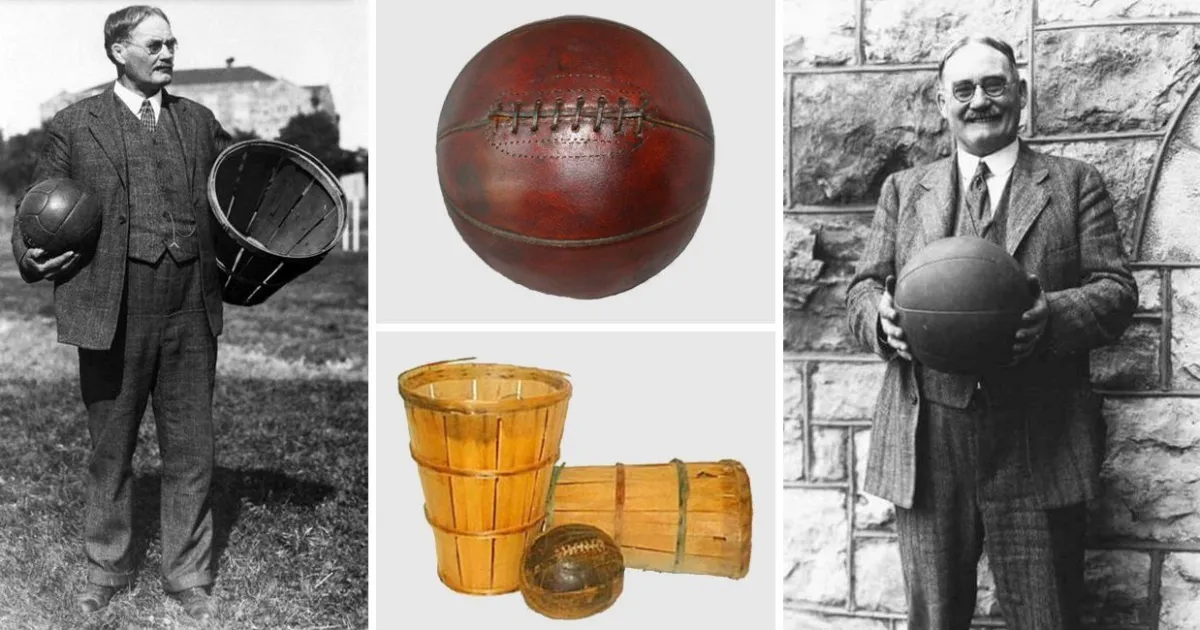 Photo: James Naismith, via i.pinimg.com
Outdoor sports were off the table — New England winters made that impractical. The indoor alternatives available at the time, like calisthenics and gymnastics, were considered boring and repetitive by a group of men who'd been playing football and baseball all fall. Previous instructors had tried to manage the class and given up. The group had earned a reputation for being unruly, disruptive, and genuinely difficult.
Naismith's supervisor, Dr. Luther Gulick, handed the problem to him directly. He needed a new indoor game — something competitive enough to hold the students' attention, physical enough to count as real exercise, and safe enough to be played in a gymnasium without destroying it or the people inside it. Gulick gave him roughly two weeks.
Naismith spent most of that time thinking and came up with almost nothing useful.
Thirteen Rules, One Lunch Break
With his deadline bearing down, Naismith sat down and started from first principles. He thought about what made outdoor games work — the teamwork, the strategy, the scoring — and tried to strip them down to something that could function in a confined space. He considered and rejected football (too much tackling), soccer (too much kicking), and lacrosse (sticks in a gymnasium seemed like a genuinely terrible idea).
What he landed on was surprisingly elegant. If players couldn't run with the ball, there'd be no need for violent blocking. If the goal was elevated and horizontal rather than vertical like a soccer net, shooting would require skill rather than raw power. If the ball was large and soft, it could be thrown and caught without the game turning into a contact sport.
He wrote up 13 rules in a single sitting — some accounts say it took less than an hour. The rules were straightforward enough that he typed them up, pinned them to the bulletin board, and told the class they were playing something new the next morning.
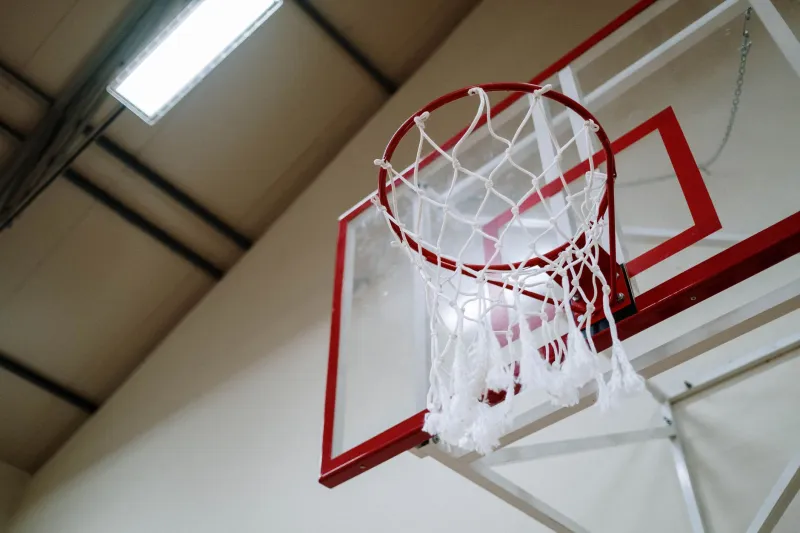
For a goal, he asked the building's superintendent if he had any boxes lying around. The superintendent didn't. What he did have were two peach baskets. Naismith nailed them to the lower railing of the gymnasium's elevated running track, which happened to sit about ten feet above the floor. That measurement was never calculated for any scientific reason. It was just where the railing was.
The first game was played on December 21, 1891. The final score was 1–0.
The Part Nobody Planned
Naismith's original vision for basketball had almost nothing to do with competition. He designed the game to be cooperative and character-building — a winter activity that would keep young men active and out of trouble until spring. He explicitly built rules against rough play. He imagined it as something like organized recreation, not sport.
He also didn't plan for the peach baskets to stay closed at the top. Every time someone scored, a person had to climb a ladder and retrieve the ball. It took years before someone finally cut the bottom out. The first mechanical retrieval systems — essentially a rod that could be pulled to release the ball — weren't widely adopted until the early 1900s.
Professional basketball? That wasn't in the plan either. The first professional league formed in 1898, just seven years after that first game in Springfield — and Naismith himself was reportedly skeptical of the direction the sport was heading. He believed physical activity should be its own reward.
He lived long enough to watch basketball become an Olympic sport in 1936, attending the Berlin Games to see the first Olympic tournament. He died in 1939, just as the sport was beginning its climb toward something he never imagined.
From Springfield to Every Neighborhood in America
Basketball's spread through American culture happened faster than almost any other sport in history. Within a year of that first game, YMCA chapters across the country were playing it. Within five years, it had spread to high schools. Within a decade, colleges were competing in organized leagues.
Part of what made it travel so quickly was how little it required. A hoop. A ball. A flat surface. No special equipment, no large teams, no elaborate field. Basketball could be played in a church gymnasium, a school hallway, a driveway, or a city playground. It scaled down to two people or up to ten without losing its appeal.
That accessibility made it the sport of American cities in a way that football and baseball never quite managed. Urban neighborhoods without large parks or open fields could still have a basketball court. The sport became inseparable from the culture of American cities, particularly in the postwar decades when urban parks departments installed courts across the country as community infrastructure.
The Peach Basket's Long Shadow
Today, the NBA employs hundreds of players, operates in 30 cities, and broadcasts games to more than 200 countries. College basketball's March Madness tournament generates enough national conversation to temporarily derail workplace productivity across America every spring. Youth basketball leagues run in virtually every town in the country.
None of it was supposed to happen. James Naismith just needed to get through December.
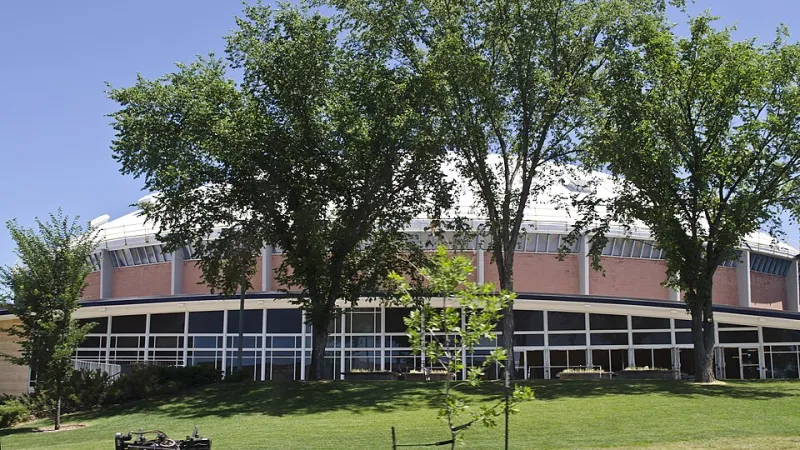
The gymnasium in Springfield where that first game was played is now the Naismith Memorial Basketball Hall of Fame. The peach baskets are long gone, but the ten-foot rim they inspired is still exactly where Naismith accidentally put it — at the height of whatever railing happened to be there on a cold Massachusetts morning in 1891.
 Photo: Naismith Memorial Basketball Hall of Fame, via c8.alamy.com