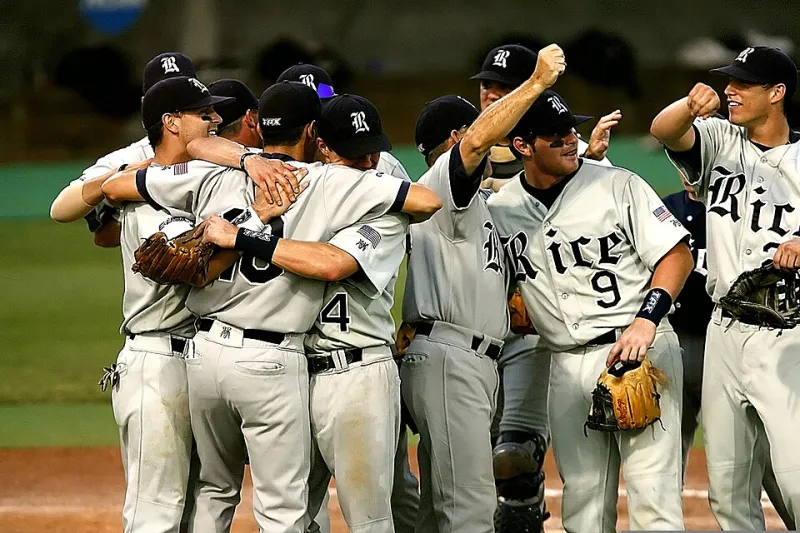
Team Owners Tried to Trap Their Players. Instead, They Built the Foundation of Every Pro Sports Contract Ever Written.
Photo: Steve Shook from Moscow, Idaho, USA, CC BY 2.0, via Wikimedia Commons
Every time an NFL quarterback signs a hundred-million-dollar deal, or an NBA star negotiates a no-trade clause, or a baseball player hits free agency after years in the league, there's a legal framework underneath all of it — a set of structures and precedents that governs how professional athletes are hired, compensated, moved, and protected. That framework didn't emerge from some visionary sports lawyer in a glass-walled office. It grew, slowly and sometimes painfully, out of a panicked business decision made by a group of 19th-century baseball owners who were simply trying to stop their players from leaving.
The Problem With Paying People
Professional baseball in the 1870s was a financial mess. The National League had formed in 1876, and team owners quickly discovered something uncomfortable: players could walk. When a contract ended, a player was free to take a better offer from a competing club. Rosters turned over constantly. Teams that spent money developing talent watched that talent walk out the door the moment someone else offered a few extra dollars.
 Photo: National League, via www.seeme-media.com
Owners weren't just frustrated — they were losing money. Building a competitive roster required real investment, and there was nothing stopping a rival from swooping in at the end of a season and poaching the players that investment had developed. Something had to change.
Their solution arrived in 1879, and they called it the Reserve Clause.
The Clause That Changed Everything
The original version was almost comically blunt. Team owners quietly agreed among themselves that each club could designate five players — their most valuable assets — who were off-limits to rival teams. Any owner who tried to sign one of those reserved players would be blacklisted from the league. The players themselves weren't told about the arrangement at first. It was, essentially, a secret agreement between owners to stop competing for each other's talent.
Within a few years, the reserve clause was no longer a back-room handshake. It was written directly into player contracts. The language varied, but the effect was consistent: once a player signed with a team, that team held the right to renew his contract indefinitely. Not for one extra year — forever, in theory. A player couldn't leave unless his team traded him, released him, or agreed to let him go. He had no right to negotiate with anyone else. He played where he was told, for whatever salary the team decided was appropriate.
From the owners' perspective, it was a practical solution to a real financial problem. From the players' perspective, it was something closer to indentured servitude. But here's where the story gets complicated — because the reserve clause, for all its inequity, forced both sides to start putting things in writing.
The Paper Trail That Built Modern Sports Law
Before the reserve clause, player agreements were loose, informal, and often verbal. The clause demanded formal contracts — written documents with specific terms, signed by both parties, enforceable in court. Teams needed paper trails to defend their reserve rights. Players needed documentation to understand what they'd actually agreed to. Lawyers got involved. Then more lawyers.
As the clause was challenged, negotiated around, and eventually fought in court across the late 19th and early 20th centuries, the contracts themselves grew more sophisticated. Teams started specifying salary amounts, performance expectations, and behavioral requirements. Players (or their representatives) began pushing back on language that seemed too broad. Every legal dispute produced a new precedent, and every precedent added another layer to the framework.
The Major League Baseball Players Association, founded in 1953 and transformed into a genuine labor union under Marvin Miller in 1966, used the reserve clause as its central battleground. Miller understood that the clause wasn't just an inconvenience — it was the axis around which all player compensation turned. If you controlled where a player could work, you controlled what he could earn.
 Photo: Major League Baseball Players Association, via cdn.britannica.com
 Photo: Marvin Miller, via media.printables.com
The breaking point came in 1975, when pitchers Andy Messersmith and Dave McNally played the entire season without signing contracts, then argued they were free agents. Arbitrator Peter Seitz agreed. The reserve clause, as it had existed for nearly a century, was dead.
What Came Out the Other Side
What replaced it wasn't chaos — it was structure. Free agency, salary arbitration, service time requirements, no-trade clauses, opt-out provisions: all of it emerged from the legal and labor negotiations that the reserve clause had forced into existence. The very mechanisms owners had used to control players became the foundation that players' unions used to build protections.
The NFL, NBA, and NHL followed similar trajectories — each sport's labor history shaped by its own version of the same fundamental tension between owner investment and player freedom. The contracts that resulted from those battles are now among the most complex legal documents in American business.
None of that was the plan. The owners of 1879 weren't trying to create a legal infrastructure for professional sports. They were trying to protect their rosters from being picked apart by competitors. They drew up some paperwork, buried a clause in it, and accidentally set in motion a century of labor law that still governs every professional athlete in the country.
The next time a star player announces a record-breaking deal, somewhere in the fine print is the distant echo of five baseball owners trying to hang onto their shortstops.