One Bored Canadian Official Bought a Bowl Nobody Needed — and Invented the Championship Trophy

Every championship in American sports ends the same way. Someone lifts a trophy over their head, the crowd goes insane, and confetti falls from the ceiling. The shape of that trophy — usually a cup, a bowl, something you could theoretically drink from — has become so universal that it's almost a visual shorthand for the concept of winning itself. The Lombardi Trophy. The Larry O'Brien Championship Trophy. The Commissioner's Trophy in baseball. All of them, in their own way, are cups.
The reason they're all cups traces back to a single afternoon in England in 1892, when a Canadian government official wandered into a silversmith's shop and made a purchase he almost certainly didn't think very hard about.
What Was There Before the Trophy?
For most of the nineteenth century, sports championships were commemorated with whatever happened to be available — cash prizes, medals, ribbons, or engraved plaques. These were practical rewards, but they weren't spectacle. They didn't photograph well. They didn't lift easily over someone's head in triumph. They didn't inspire the kind of visual mythology that sports organizations were starting to understand they needed.
The concept of a large, singular object representing a championship — something that could be passed from winner to winner, displayed in a case, and treated almost like a sacred relic — didn't exist in any organized way. Someone had to stumble into it.
The Man, the Shop, and the Bowl
In 1892, Frederick Arthur Stanley — Lord Stanley of Preston, the Governor General of Canada — attended a hockey game in Ottawa and was impressed by the sport's growing popularity. He wanted to do something to encourage it. He mentioned this to one of his aides and, without a great deal of ceremony or planning, asked him to find something suitable to serve as an award for the top amateur hockey team in Canada.
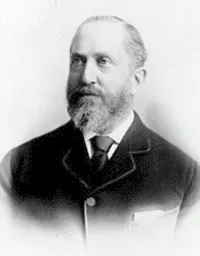 Photo: Frederick Arthur Stanley, via d3d0lqu00lnqvz.cloudfront.net
The aide — by most accounts acting on fairly loose instructions and a small budget — traveled to England and walked into a silversmith's shop in London. He found an ornamental punch bowl, roughly the size of a large salad bowl, made of silver and lined with gold. It cost approximately ten dollars at the time. He bought it, had it engraved, and sent it back to Canada.
Lord Stanley never actually attended the first presentation of the bowl that bore his name. He was recalled to England before it was awarded. The whole affair was, by any measure, an administrative afterthought — a purchasing decision made by a mid-level official on a modest budget with minimal oversight.
That bowl became the Stanley Cup.
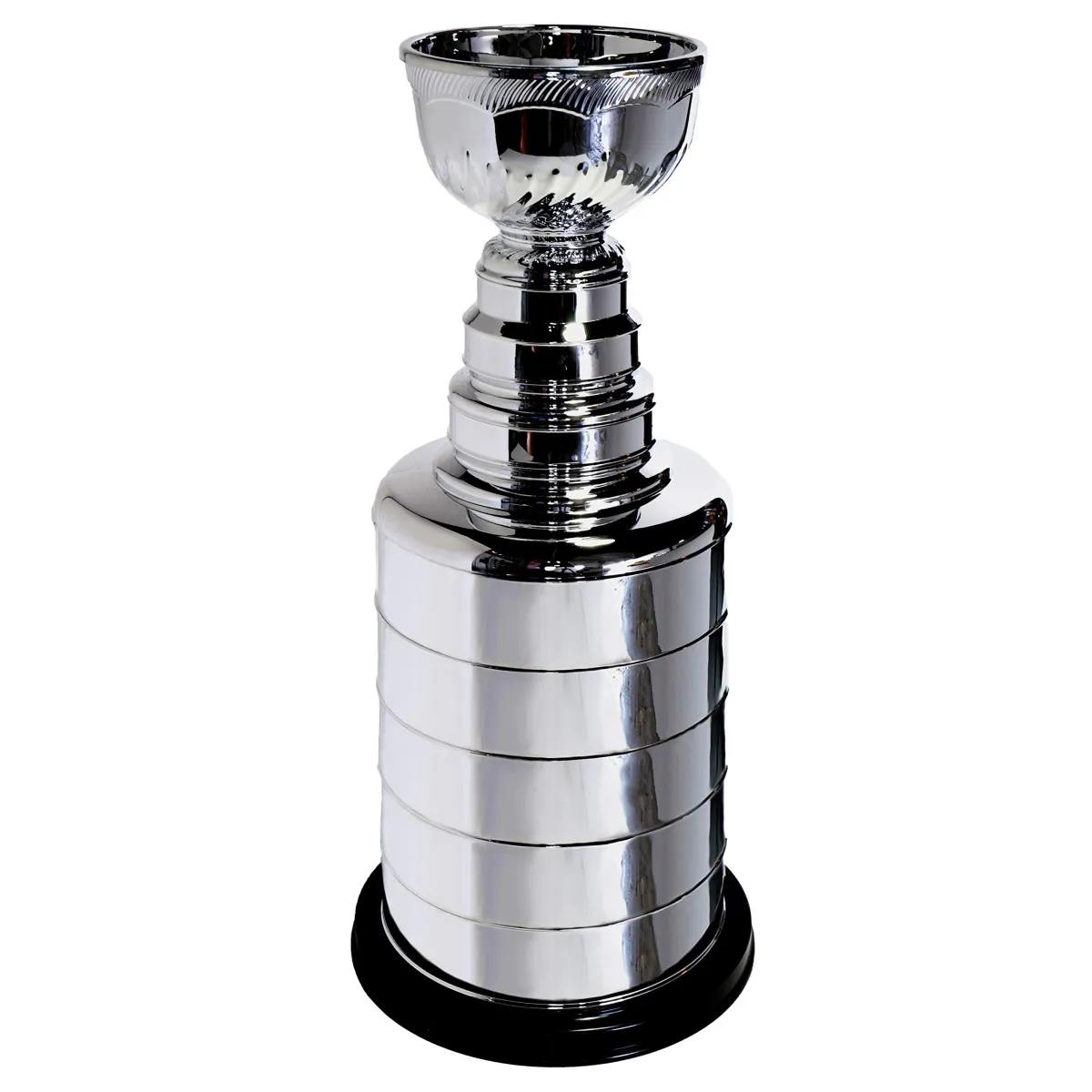 Photo: Stanley Cup, via images-na.ssl-images-amazon.com
How a Punch Bowl Became a Blueprint
The original Stanley Cup was, physically speaking, not much to look at. It was small, simple, and designed to hold punch, not hockey champions. But what it represented — a single, physical object that could be won, held, and passed on — turned out to be a genuinely powerful idea.
As the Cup's prestige grew through the early twentieth century, other sports organizations began to take notice. The shape was part of it. A cup or bowl, with its open top and ceremonial scale, felt ancient in a way that a plaque or a medal didn't. It echoed the trophy cups of Greek and Roman athletics, the ceremonial drinking vessels of medieval tournaments. Even if nobody was consciously making those connections, the visual language was there. A cup meant something had been won.
By the time American professional sports leagues began commissioning their own championship hardware — the Vince Lombardi Trophy in 1967, the Larry O'Brien in 1977, the Commissioner's Trophy in 2000 — the cup shape was so established as the grammar of championship that departing from it felt like a risk. Some trophies pushed the form in new directions — the Lombardi Trophy is a football mounted on a stand, not a cup at all — but the underlying logic was the same: a single, distinctive physical object that belongs to the winner and nobody else.
The Stanley Cup itself grew over the decades, with new bands added each year to record the names of winning teams and players. The original punch bowl sits at the top of a trophy that now stands nearly three feet tall and weighs almost 35 pounds. The aide who bought it for ten dollars could not have imagined what he was starting.
Why the Cup Shape Stuck
There's a functional argument for the cup shape that goes beyond tradition. A cup can be raised. It can be held aloft with two hands, arms extended, in the pose that has become the universal image of sporting triumph. A plaque cannot do that. A ribbon cannot do that. Even a statue struggles to communicate the same thing.
The raised cup is readable from the back of a stadium, from the upper deck, from a television screen in a bar. It is legible as victory in a way that few other objects are. That legibility wasn't designed — it was discovered, almost by accident, when a Canadian aide picked up a silver punch bowl in a London shop and thought it looked like enough of an award.
The Accidental Institution
The great irony of the championship trophy is that such a carefully maintained, deeply symbolic tradition began with so little intention. No committee designed the concept. No league commissioner commissioned a study. One man bought a bowl, and everyone else followed.
That's how a lot of things begin. Not with a plan, but with someone making a small decision that turns out to matter enormously — and then everyone else building the mythology around it after the fact.
Next time you watch a team hoist a trophy and the crowd loses its mind, you're watching the echo of a ten-dollar purchase made on a Tuesday afternoon in 1892. The man who made it didn't stick around to see the ceremony. He had other things to do.