One Man's Frustration With Slow Shoppers Accidentally Invented the Way We Buy Everything
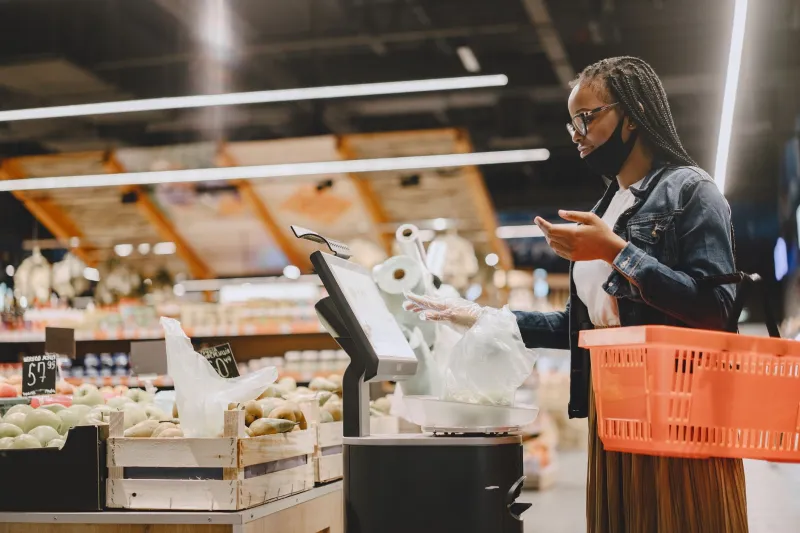
Think about the last time you went grocery shopping. You grabbed a cart, wandered down the aisles, tossed things in as you went, and eventually funneled toward the checkout line. Simple. Automatic. So normal it barely registers as an experience at all.
Now consider that none of that existed before 1916.
For most of human history, buying food was a completely different transaction. You walked into a store, stood at a counter, and told a clerk what you needed. The clerk disappeared into the back, pulled the items, wrapped them up, and handed them over. It was personal. It was slow. And for one particular businessman in Memphis, Tennessee, it was absolutely maddening.
The Problem With the Old Way
Clarence Saunders wasn't a grocer by training. He was a salesman — restless, opinionated, and perpetually convinced that things could be done better. By the early 1900s, he'd worked his way through several positions in the food distribution business and had developed a strong theory about why grocery stores were so inefficient.
The counter model had a fundamental flaw: it was a bottleneck. One clerk could only serve one customer at a time. If the store was busy, you waited. If the clerk was slow, you waited longer. The whole system depended on human speed, and human speed was inconsistent.
Saunders also noticed something else. Customers who were handed their groceries by a clerk had no idea what other products were available. They asked for what they already knew. They left without discovering anything new. For a retailer, that was a missed opportunity on a massive scale.
His solution was radical enough that most people in the industry thought he'd lost his mind.
The Store That Made You Do It Yourself
On September 6, 1916, Saunders opened the first Piggly Wiggly store on Jefferson Avenue in Memphis. The name alone raised eyebrows. The interior was something nobody had ever seen.
Instead of a counter, there were aisles. Shelves lined with products, all priced and labeled, all accessible to the customer directly. A turnstile at the entrance. A defined path that wound customers through the entire store before depositing them at a checkout station near the exit. Every item was visible. Every price was marked. You picked up what you wanted, carried it to the end, paid, and left.
Saunders called it "self-service."
The checkout line — that serpentine queue that now defines every retail environment on earth — wasn't just a practical necessity. It was a deliberate design feature. By routing customers through a single exit point, Saunders could staff one register instead of several clerks, dramatically cutting labor costs. It also made theft significantly harder. There was only one way out, and it went through the cash register.
The Numbers Were Impossible to Argue With
Skeptics didn't have long to wait for results. Piggly Wiggly was an immediate hit. Customers loved the freedom of browsing on their own schedule. Prices were lower because labor costs had dropped. The store could stock a wider variety of products because it didn't need clerks who knew where everything was — the shelves did that work instead.
Within two years, Saunders had opened dozens of locations. By 1922, there were more than 1,200 Piggly Wiggly stores operating across the country. Saunders had taken out a patent on the self-service store concept in 1917, making him the legal owner of an idea that was rapidly becoming the future of American retail.
Competitors scrambled to imitate him. The grocery industry, which had operated on essentially the same model for generations, began a rapid transformation. The counter clerk started disappearing. The aisle started appearing everywhere.
The Ripple That Never Stopped
What Saunders created in Memphis didn't stay in grocery stores. The logic of self-service — browse freely, select independently, pay at a single exit point — spread into nearly every retail category over the following decades.
Department stores reorganized around it. Pharmacies adopted it. Hardware stores, clothing retailers, bookstores — all of them eventually restructured around the idea that customers could navigate a space on their own and arrive at a checkout point when they were ready. The checkout line became the universal punctuation mark at the end of every shopping experience.
The shopping cart, introduced in 1937 by Sylvan Goldman in Oklahoma City, was a direct response to the world Saunders had created. You couldn't have a cart without aisles. You couldn't have aisles without self-service. Goldman's invention only made sense because Saunders had already changed the architecture of the store.
The Inventor Who Lost Everything
Here's the part of the story that tends to get left out.
Clarence Saunders, the man who invented modern retail, died nearly broke.
After his early success, Saunders got into a battle with Wall Street investors who attempted to short-sell Piggly Wiggly stock. He fought back aggressively, buying up shares to drive the price up, and briefly succeeded — but the New York Stock Exchange intervened, changed the rules mid-game, and Saunders was left holding an enormous debt he couldn't cover. He lost control of Piggly Wiggly in 1923 and was forced to surrender the Memphis mansion he'd been building, which locals had already nicknamed "the Pink Palace."
He spent the rest of his life trying to recreate his success with new store concepts, never quite getting there.
Piggly Wiggly still exists today, operating as a regional chain across the South and Midwest. The Pink Palace became a museum. And every time you grab a cart, navigate an aisle, and wait in a checkout line, you're moving through a system that one frustrated salesman in Tennessee designed more than a hundred years ago — and never fully got credit for.