The German Chemist Who Accidentally Gave America Its Most Complicated Pill
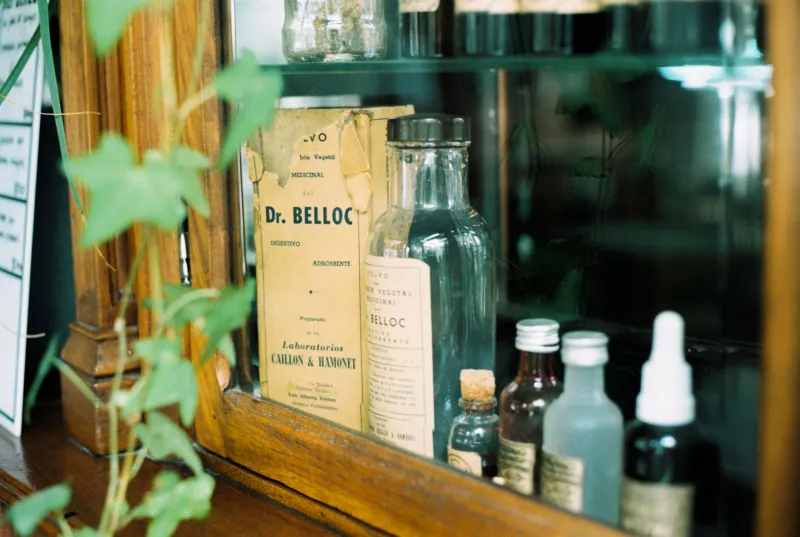
There's a pill sitting in almost every medicine cabinet in America right now. It's cheap, it's small, and most people couldn't tell you where it came from. They just know it works. What they probably don't know is that the company that made aspirin a household name also introduced the world to heroin — and that the ripple effects of both decisions are still being felt today.
Every ordinary thing has an extraordinary story. This one starts in a German lab in 1897.
A Son, a Father, and a Very Bad Taste
Felix Hoffmann was a chemist at Bayer, the German pharmaceutical company, and his father was suffering from severe rheumatism. The standard treatment at the time was salicylic acid — a compound derived from willow bark that had been used as a pain reliever for centuries. It worked, more or less. The problem was that it tasted absolutely terrible and wrecked the stomach lining of anyone who took it regularly. Hoffmann's father reportedly told his son he'd rather live with the pain than keep drinking the stuff.
That complaint sent Hoffmann back to the lab. In August 1897, he successfully synthesized acetylsalicylic acid — a chemically modified version of salicylic acid that was gentler on the stomach and far more palatable. Bayer recognized what they had and began marketing it in 1899 under a name they coined themselves: aspirin. The "a" came from acetyl, "spir" from Spiraea ulmaria (the plant source), and "in" was simply a common pharmaceutical suffix of the era.
Within a few years, aspirin was being sold in powder form across Europe and North America. By 1915, Bayer had started producing it in tablet form — a format so practical and familiar that we still use it today. Americans were consuming it by the ton.
The World War I Twist Nobody Talks About
Here's where the story takes its first unexpected turn. When the United States entered World War I, the U.S. government seized Bayer's American assets — including the aspirin trademark — as enemy property. The patent was auctioned off, and "aspirin" entered the American language as a generic term. While Bayer retained the trademark in most other countries, in the U.S., aspirin became just a word. A common noun. Something anyone could make and sell.
That legal accident is part of why aspirin became so deeply embedded in American life. No single company owned it here. It was everybody's drug. By the mid-twentieth century, Americans were taking billions of tablets a year — for headaches, fevers, inflammation, and eventually, heart health, after researchers in the 1970s and 80s discovered that low-dose aspirin could help prevent blood clots.
The Other Thing Bayer Made That Year
Now here's the part of the story that tends to make people set down their coffee.
Felix Hoffmann didn't just synthesize aspirin in 1897. Two weeks earlier — or possibly around the same time, depending on which historical account you trust — Bayer's labs also synthesized diacetylmorphine. Bayer marketed that compound under a brand name too. They called it heroin, derived from the German word heroisch, meaning heroic, because test subjects reported feeling powerful and strong when they took it.
Bayer sold heroin as a cough suppressant and a supposedly non-addictive substitute for morphine. It was available over the counter. It was marketed to children with respiratory problems. For a brief period, heroin and aspirin were both Bayer products sitting on pharmacy shelves across the Western world.
Of course, heroin turned out to be catastrophically addictive, and it was eventually banned. But the fact that the same company, in the same era, produced both the world's most benign painkiller and one of its most destructive drugs says something important about how medicine has always operated — in a space between breakthrough and blunder, often without knowing which one it's making.
From Medicine Cabinet to Cultural Crisis
Aspirin itself remained mostly uncontroversial for decades. But the pharmaceutical industry it helped build did not.
The opioid crisis that has devastated American communities since the 1990s has roots in the same optimistic logic that once made heroin seem like a reasonable product: the belief that a drug that works powerfully for pain must be safe to prescribe broadly. OxyContin, Vicodin, fentanyl — none of them are aspirin, but they exist in a pharmaceutical ecosystem that aspirin helped normalize. The idea that pain has a pill, and that pill can be mass-produced and mass-distributed, is part of aspirin's legacy as much as it is part of the opioid epidemic's origin story.
Aspirin itself has also grown more complicated with time. Doctors who once recommended a daily low-dose aspirin to almost every adult over 50 now caution that the bleeding risks may outweigh the benefits for many patients. The pill that seemed like a simple answer has become a nuanced conversation.
Why It Still Matters
Aspirin is still one of the most studied drugs in history. Researchers continue to explore its potential role in cancer prevention, Alzheimer's disease, and pregnancy complications. It remains on the World Health Organization's list of essential medicines.
But its story — from a chemist trying to help his father, to a wartime seizure that made it everyone's property, to a corporate origin shared with one of history's most destructive drugs — is a reminder that the things we reach for without thinking almost always began somewhere specific, under specific circumstances, with specific consequences nobody fully anticipated.
The pill in your medicine cabinet has a history. It's just not the simple one you'd expect.