The Dog Trainer's Tool That Became the Most Obeyed Sound in American Sports

The Dog Trainer's Tool That Became the Most Obeyed Sound in American Sports
Every American sports fan knows the sound. One sharp blast and a play stops dead. Two short bursts and a penalty is called. Three long notes and the game is over. The referee's whistle is so embedded in how we experience sports that it's almost impossible to imagine a game without it. But for most of the nineteenth century, that's exactly what athletes, coaches, and spectators had to deal with — games controlled by nothing more than a man yelling at the top of his lungs.
The whistle didn't begin in a stadium. It didn't begin in a gym. It began in the English countryside, in the hands of someone trying to get a dog to come back.
When Referees Just… Yelled
In the early days of organized American sport, officiating was a rough business. Baseball umpires stood behind the pitcher's mound and called balls and strikes by shouting. Football referees waved colored handkerchiefs and rang handbells to signal fouls. Basketball, in its earliest form, was controlled by a timekeeper who sometimes just clapped his hands and hoped the players noticed.
None of it worked particularly well. Games were loud. Crowds were louder. Players argued constantly, partly because they genuinely couldn't hear the official, and partly because the ambiguity gave them room to pretend they couldn't. A shouted call carried no authority. A waved handkerchief could be ignored. The result was chaos — slow, exhausting, argument-filled chaos that made early professional sport feel more like a neighborhood dispute than a competition.
What officiating needed was a sound that cut through everything. Something sharp, immediate, and impossible to ignore. Nobody in American sports figured that out first. A British police officer did.
One Whistle, One Street, One Very Different Purpose
In 1884, a London police inspector named Joseph Hudson was tasked with finding a better way to signal between officers on patrol. The standard method — shouting or blowing a horn — was inconsistent and easy to miss in a crowded city street. Hudson, who had already been experimenting with small metal instruments, designed a compact brass whistle with a small ball — a pea — sealed inside the chamber.
 Photo: Joseph Hudson, via img.bomboradyo.com
When you blew air through it, the pea spun against the interior walls and produced a distinctive, high-pitched trill. The sound was piercing. It carried over distance. It cut through noise in a way that no human voice could match. Hudson's design was adopted by London's Metropolitan Police almost immediately, and within a few years it had spread across British law enforcement.
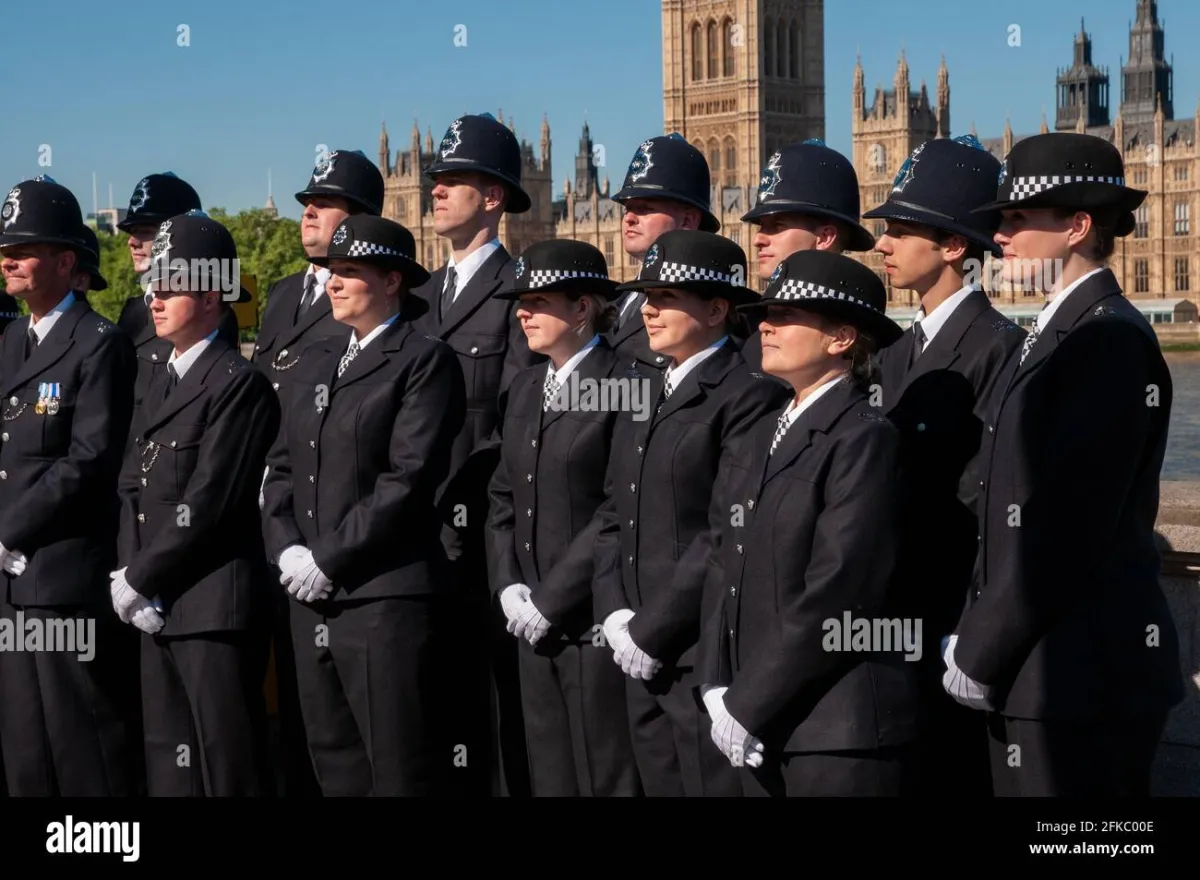 Photo: Metropolitan Police, via c8.alamy.com
But the whistle Hudson designed wasn't entirely new in concept. Variations of the pea whistle had been used for decades by hunters and dog trainers who needed a reliable, hands-free way to signal their animals across open fields. The physics were simple: a sharp, consistent tone at a frequency that animals — and, as it turned out, humans — respond to instinctively. Hudson just refined it, miniaturized it, and put it in the hands of people who needed authority.
Sports officials were watching closely.
The Atlantic Crossing
By the late 1880s, British football — what Americans call soccer — had begun adopting the police whistle as an officiating tool. The results were immediate and obvious. Disputes dropped. Play moved faster. The whistle's authority was near-total, because the sound itself was associated with law enforcement and demanded an instinctive response. Players stopped arguing quite as much, if only because the whistle felt official in a way that a handkerchief simply didn't.
When American sports organizers began looking for ways to clean up their own officiating chaos in the 1890s and early 1900s, the whistle came with them. Baseball was slower to adopt it — umpires in that sport developed their own traditions of voice and gesture that persist to this day — but basketball and football embraced the whistle almost immediately. By the time the NFL began formalizing its rules in the 1920s, the referee's whistle was already non-negotiable equipment.
The pea whistle Hudson designed for London police became the standard model for decades, eventually giving way to newer materials — plastic, stainless steel, electronic amplification — but the basic design barely changed. You blow air through a small chamber, a ball spins, and everyone on the field stops moving. The dog trainers figured that part out long before anyone else.
The Most Powerful Sound Nobody Thinks About
Today, the whistle is so ordinary that it disappears into the background of sports. Fans don't think about it. Players respond to it without hesitation. Coaches have entire vocabularies built around its patterns — one blast means this, two blasts mean that, a long sustained note means something else entirely.
What's remarkable is how completely a borrowed tool became an original institution. The whistle didn't evolve out of sports culture. It was imported from somewhere else entirely, adapted for a new purpose, and then so thoroughly absorbed that its origins became invisible.
That's the thing about the most effective tools — they stop feeling like tools at all. They just feel like the way things are.
The next time a referee stops your favorite game with a single sharp blast, know that you're hearing the direct descendant of an instrument built to bring a hunting dog back to heel. It worked on dogs. It worked on London street criminals. And for more than a century, it's worked on the fastest, strongest, most competitive athletes in the world.
Some inventions are elegant. Some are accidental. This one was both — and it fits in your shirt pocket.