The Accidental Inventor Who Put Fizz in Every American Celebration
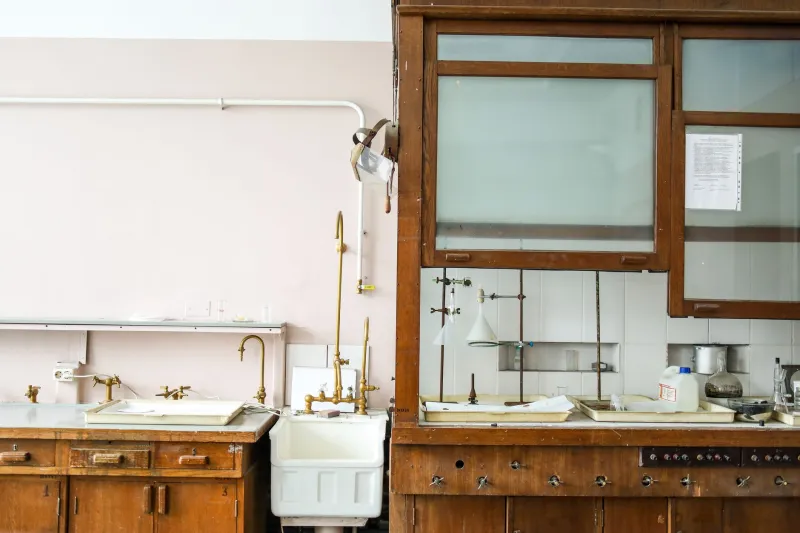
The Professor Who Made Water Dance
Every time a championship team dumps Gatorade on their coach, every time a stadium crowd raises fizzing sodas in celebration, every time someone pops a champagne cork—they're participating in a tradition that started with a chemistry professor who was just trying to fix his stomach problems.
Joseph Priestley didn't set out to revolutionize American celebrations when he moved next door to a brewery in Leeds, England, in 1767. He was a minister and part-time scientist who suffered from chronic indigestion and thought maybe, just maybe, he could brew up a cure using the latest scientific methods.
 Photo: Joseph Priestley, via kolorowanki.net.pl
What he accidentally created instead was the foundation for a multibillion-dollar industry and the signature element of American victory celebrations.
The Brewery Next Door
Priestley's timing was perfect, though he didn't know it. The brewery next to his house produced beer using traditional fermentation methods, which released massive amounts of carbon dioxide as a waste product. Most brewers simply let the gas escape into the air—it was useless, invisible, and mildly annoying.
But Priestley was curious about gases. He'd been experimenting with different "airs" (as gases were called then) and wondered if he could capture and study the mysterious vapor rising from the brewery's fermentation vats.
Using a simple apparatus of bowls, tubes, and water, he managed to dissolve the carbon dioxide gas directly into plain water. The result was something that had never existed before: artificially carbonated water that fizzed and bubbled like nothing anyone had ever tasted.
The Cure Nobody Wanted
Priestley was convinced he'd created a medical breakthrough. He called his invention "impregnated water" and believed it could cure scurvy, aid digestion, and solve various stomach ailments. He published papers about it, demonstrated it for the Royal Society, and even convinced a few physicians to prescribe it to patients.
There was just one problem: it tasted terrible.
Plain carbonated water had a sharp, acidic bite that most people found unpleasant. Patients complained it was worse than their original ailments. Priestley's medical colleagues were polite but skeptical. His revolutionary discovery seemed destined to remain a laboratory curiosity.
"The taste is peculiar and not immediately agreeable," Priestley wrote in his journal. He was being generous. Most people described it as drinking liquid fire.
The Atlantic Crossing That Changed Everything
Priestley's carbonated water might have died in English laboratories if not for a Swedish chemist named Torbern Bergman, who read Priestley's papers and had a different idea. Instead of using carbonation for medicine, what if you mixed it with flavors to make it pleasant to drink?
Bergman's experiments with flavored carbonated water reached America through scientific correspondence and immigrant chemists in the late 1700s. By the 1830s, American pharmacists were creating their own versions, mixing carbonated water with fruit syrups, herbs, and eventually sugar to create what they called "soda water."
The first American soda fountains appeared in pharmacies, where customers could order carbonated drinks mixed to order. The pharmacists still marketed them as health tonics, but customers were coming for the taste and the unique sensation of drinking something that bubbled and fizzed.
From Medicine to Celebration
The transformation from medical treatment to celebration drink happened gradually, then suddenly. By the 1880s, soda fountains were social gathering places. By the 1920s, bottled carbonated drinks were becoming mass-market products. Coca-Cola, Pepsi, and dozens of other brands built empires on Priestley's accidental discovery.
But the real cultural shift happened in American sports. Carbonated drinks became associated with celebration because they were special occasion beverages—more expensive than water, more festive than milk, more accessible than alcohol.
When the New York Giants won the 1954 World Series, players celebrated in the clubhouse with Coca-Cola. The tradition grew from there. By the 1980s, dumping coolers of sports drinks (which are also carbonated) on winning coaches had become a standard celebration ritual.
 Photo: New York Giants, via www.desigual.com
The Science of Celebration Fizz
What Priestley accidentally discovered was that carbonation triggers multiple sensory experiences simultaneously. The bubbles create a physical sensation on the tongue, the carbonic acid provides a sharp taste, and the release of CO2 creates an aromatic experience. It's literally more stimulating to drink than still beverages.
Dr. Paul Breslin, a sensory scientist at Rutgers University, explains why fizzy drinks became celebration staples: "Carbonation activates pain receptors in the mouth, but in a pleasant way. It's a mild form of excitement that matches the emotional state of celebration."
The Fizz That Built America
Today, Americans consume more carbonated beverages per capita than any other country. The industry that grew from Priestley's indigestion cure generates over $250 billion annually in the United States alone.
Every stadium vendor selling Coke, every championship team spraying champagne, every backyard barbecue stocked with soda—they're all continuing a tradition that began with a curious minister trying to settle his stomach using brewery waste.
The Accident That Keeps Bubbling
Joseph Priestley died in 1804, long before carbonated drinks became American cultural icons. He never saw a Gatorade shower, never witnessed 50,000 fans raising fizzy drinks in unison, never imagined that his failed medical experiment would become the signature element of American celebrations.
He was trying to cure indigestion. Instead, he accidentally created the fizz that makes victory taste better, that turns ordinary moments into celebrations, that gives every American gathering its signature sound: the pop and hiss of carbonation escaping into the air.
The next time you hear that sound—at a game, at a party, at any moment worth celebrating—remember that it all started with a professor, a brewery, and a stomach ache that led to the most delicious accident in American history.