The Locker Room Handshake That Accidentally Became Sports' Most Important Tradition
The Desperate Coach Who Started It All
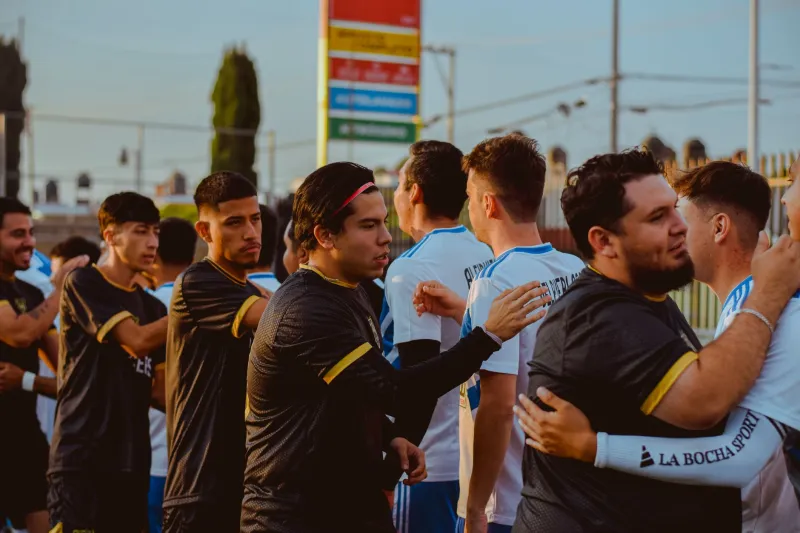
Every weekend across America, millions of young athletes line up after games to shake hands with their opponents. Win or lose, they trudge through the ritual—high-fives, "good game" mumbled through gritted teeth, coaches nodding approvingly from the sidelines. It's as automatic as the national anthem, as expected as keeping score.
But this sacred tradition? It started because one amateur baseball coach in 1908 was tired of breaking up fistfights.
William "Doc" Meanwell wasn't even a baseball coach by trade. He taught physical education at the University of Wisconsin and coached basketball in the winter. But when he volunteered to manage a local amateur baseball team in Madison, he walked into a problem that was plaguing recreational sports across the country: games were ending in chaos.
 Photo: William "Doc" Meanwell, via images.wall-art.de
When "Good Game" Meant Anything But
In the early 1900s, amateur athletics operated under a loose code of gentleman's conduct, but reality was messier. Players argued with umpires, fans invaded fields, and post-game confrontations were common enough that local newspapers regularly reported on "diamond disputes" alongside game scores.
Meanwell watched his players and opponents nearly come to blows after a particularly heated game in July 1908. Both teams had spent nine innings trading insults, disputing calls, and letting frustration build. When the final out was recorded, players from both dugouts started toward each other—not to congratulate, but to settle scores.
"Something had to change," Meanwell wrote in his journal, which was discovered in the Wisconsin Historical Society archives in 1987. "These boys were representing their communities, their families. They needed to remember that."
The Experiment That Worked Too Well
For the next game, Meanwell tried something radical. Before the first pitch, he gathered both teams at home plate and announced a new rule: regardless of the outcome, both teams would line up after the game and shake hands. No exceptions. No arguments. No walking away angry.
The players thought it was ridiculous. The opposing coach called it "unsporting" and "artificial." But Meanwell had leverage—his team was hosting, and he controlled the field.
That first handshake line was awkward and forced. Players shuffled through quickly, barely making eye contact. But something unexpected happened: the usual post-game tension evaporated. Players who had been jawing at each other all afternoon found themselves laughing about disputed calls instead of stewing over them.
From Madison to Manhattan
Word of Meanwell's handshake experiment spread through amateur baseball circles faster than anyone anticipated. Coaches dealing with similar problems began implementing their own versions. By 1910, the Madison Amateur Baseball Association had made post-game handshakes mandatory for all member teams.
The tradition might have stayed local if not for the Great War. When American soldiers returned from Europe in 1918 and 1919, many brought with them stories of sportsmanship they'd witnessed between Allied forces during rare moments of recreation. The handshake line, which had been spreading slowly through Midwest amateur leagues, suddenly seemed to embody something larger—a way to compete fiercely while maintaining respect.
Youth baseball leagues from Boston to San Francisco began adopting the practice. By the 1920s, it was standard in organized youth sports across the country.
The Psychology Behind the Line
What Meanwell accidentally discovered was something sports psychologists wouldn't formally recognize until decades later: the power of structured closure. The handshake line forces players to acknowledge their opponents as people, not enemies. It creates a moment of vulnerability—you have to look someone in the eye and offer your hand, even if they just crushed your dreams of victory.
Dr. Sarah Martinez, who studies youth sports psychology at Stanford, explains why the tradition has endured: "It's one of the few moments in competitive sports where the focus shifts from performance to humanity. Kids learn that the person who just struck them out or scored the winning goal is still worthy of respect."
The Sacred Ritual Nobody Questions
Today, the post-game handshake is so ingrained in American sports culture that questioning it seems almost blasphemous. Youth leagues make it mandatory. High school coaches get suspended for refusing to participate. College and professional teams that skip the handshake line face criticism from media and fans.
What started as one coach's desperate attempt to prevent fistfights has become the moment that defines sportsmanship in America. Parents teach their children that you can compete with everything you have for 60 minutes, 90 minutes, or nine innings—but when it's over, you shake hands.
Why It Still Matters
In an era when professional athletes sometimes skip handshake lines after playoff losses, when social media turns every controversial call into a national debate, the youth sports handshake line remains sacred. It's one of the few traditions that crosses all demographic lines—rich and poor kids, urban and rural teams, every sport from soccer to swimming.
Doc Meanwell never could have imagined that his solution to a local problem would become a defining characteristic of American youth sports. He just wanted his players to stop fighting. Instead, he accidentally created a tradition that teaches millions of children every year how to lose with dignity and win with grace.
Every time two teams line up after a game, they're participating in a ritual that began with one coach's simple belief: competition should make us better people, not bitter enemies.