Before 1923, Nobody Agreed on What 'Stop' Looked Like — Then a Letter Changed Every Intersection in America
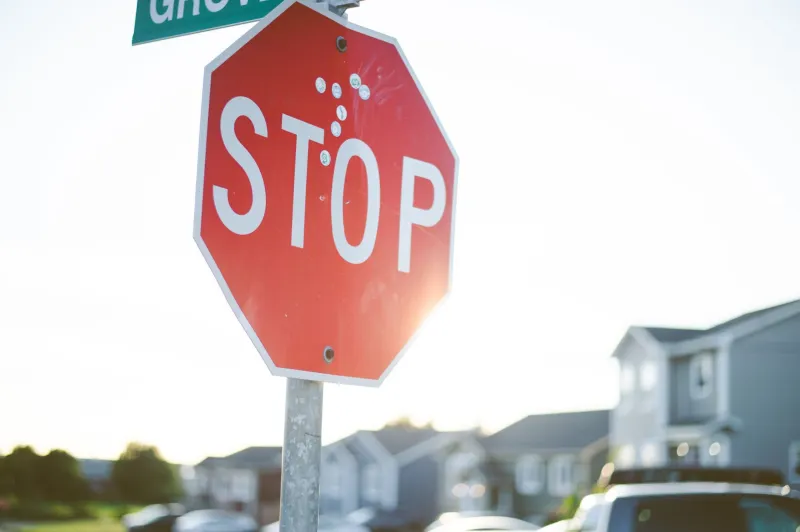
Drive through any American neighborhood and you'll pass them without a thought: red octagons, four feet of authority on a metal pole. The stop sign is so woven into daily life that it feels like it must have existed since the invention of the road.
It didn't. The stop sign is barely a century old, and its birth was a mess of competing cities, arguing engineers, and one design decision that seems obvious only in hindsight.
Roads Were the Wild West
In the early 1900s, American streets had almost no rules of the road as we know them. Cars were new, drivers were reckless, and signage varied wildly from town to town. A driver crossing state lines might encounter entirely different warnings, shapes, and meanings. Some places used diamond-shaped signs. Others used squares or even round markers. There was no national standard because there was barely a national road system.
Into this chaos walked the automobile clubs and state highway departments, each convinced they knew best. The stage was set for a fight over what, exactly, 'stop' should look like.
A Letter That Launched a Thousand Arguments
The most commonly told origin story centers on 1923, when officials at the Mississippi Valley Association of State Highway Departments submitted a proposal that would shape American roadways forever. Their suggestion was elegantly blunt: the more sides a sign had, the greater the hazard it should warn about.
Round signs for railroad crossings — the most dangerous spots. Diamond signs for warnings. And for the highest level of caution at intersections? An octagon. Eight sides, unmistakable at a glance.
Whether the idea came from a single engineer, a committee debate, or a letter from a persistent motorist has been debated for decades — and small towns across the Midwest still claim a piece of the credit. What's certain is that the octagonal stop sign was adopted into the national manual of traffic control, and the American intersection was never the same.
Why Eight Sides Actually Mattered
Here's the part that turns a bureaucratic squabble into genius. The octagon wasn't chosen because it looked nice. It was chosen because of one overlooked problem: drivers approaching an intersection from the opposite direction.
Every other sign shape on the road — square, diamond, circle — looks roughly the same from front and back. But an octagon's silhouette is distinctive even when you can't read it. A driver facing the back of a stop sign knows instantly what's on the other side: a full stop, and possibly a pedestrian crossing in front of them. The shape communicates even when the sign faces away from you.
That single insight — protecting people on foot from drivers who can't see the sign — is why eight sides won. Form followed function so precisely that the logic still holds up a hundred years later.
The Color Came Later (and From a Cow, Sort Of)
The red stop sign isn't original, either. Early signs were white with black lettering, because red paint with reliable reflective qualities simply didn't exist. The yellow stop sign you might spot in vintage photos wasn't a mistake — yellow was the standard for warnings through the 1920s and into the 1950s.
Red didn't take over until fade-resistant, reflective red coatings were finally developed, largely borrowed from railway signal technology. By 1954, the manual made red official, finally matching the sign's shape with the color everyone already associated with 'halt.'
The Most Obeyed and Most Ignored Rule in America
Today, the stop sign holds a strange dual status in American life. It's arguably the most universally recognized traffic control device on Earth — and also the most casually disregarded. The 'rolling stop' is practically a national folk custom, and full stops at empty residential intersections are rare enough that police departments have built entire enforcement campaigns around them.
Yet the sign endures, unchanged in shape for a century, because the reasoning behind it was airtight. A committee argument in 1923, settled with geometry, now governs every corner of every neighborhood in the country. Next time you brake at that red octagon, consider that you're obeying a design decision made before your grandparents were born — and that somewhere, a small town is still insisting it was their idea.