Four Sounds Every Fan Takes for Granted — and the Outrages That Put Them There
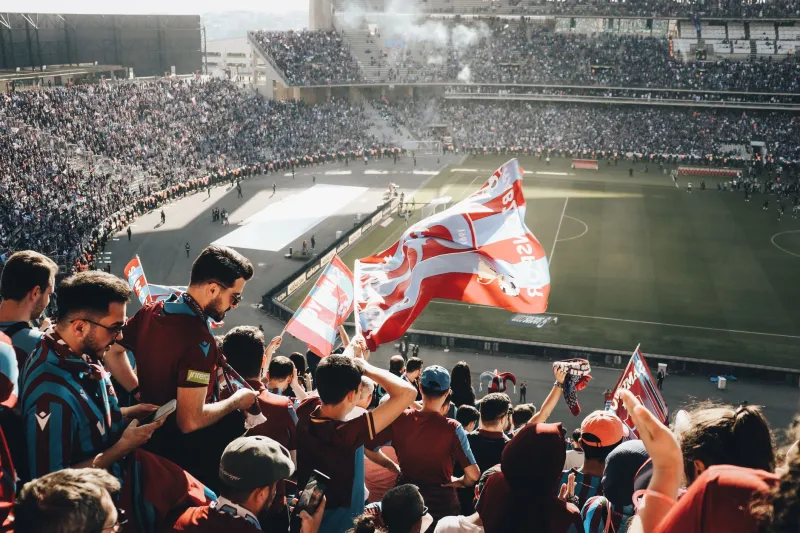
Live sports feel like they've always had a soundtrack. The organ, the horn, the rolling roar of the crowd doing the Wave, the ref's whistle snapping everything to a stop — it all seems permanent, part of the architecture.
It isn't. Every one of these sounds was once an intruder. Each had to fight its way past angry purists, official bans, or outright public fury before earning a permanent spot in the stadium. Here's how the noise got in.
1. The Organ That Wasn't Supposed to Be There
Baseball in the early 20th century had a strict soundtrack: the crowd and nothing else. So when the Chicago Cubs decided, sometime around 1941, to install a pipe organ at Wrigley Field, it struck many fans as carnival nonsense — vaudeville trickling into the national pastime.
It didn't fully catch on at first. Wrigley's organ was actually removed and not restored until 1967. But across town, the White Sox doubled down, and organist Nancy Faust became a South Side institution over four decades, her riffs taunting opposing players and celebrating Sox runs. What started as a gimmick spread everywhere: today, from minor league parks to NFL stadiums, a keyboardist pumping out a few notes after a big play is as standard as a hot dog. The disruption won by simply refusing to leave.
2. The Air Horn: Banned, Then Everywhere
The air horn was born as a tool, not a toy. In the 1970s, a Canadian inventor, Peter Roberts of Quebec, developed a compressed-air horn for rescue boats — a loud, reliable distress signal for kayakers and small craft.
Then sports fans got hold of it.
The horn's ear-splitting blast was quickly adopted by hockey crowds, soccer supporters, and NASCAR fans, and stadiums responded with bans. Air horns joined a long list of prohibited noisemakers — along with cowbells, drums, and vuvuzelas — that leagues periodically outlaw for being, well, too loud. The bans never stuck for long. The horn migrated to celebrations, tailgates, and highlight reels, and its blast is now shorthand for victory itself. A distress signal for lost kayakers became the sound of a game-winning goal. The boat industry never stood a chance.
3. The Wave: One Man's Idea at a Football Game
The Wave — that human ripple rolling around a stadium — has a contested origin story, but the most credible account credits George Fichter, a Stanford University cheerleader (or, in some tellings, "Crazy" George Henderson, the professional cheerleader who popularized it), during an October 1981 Stanford football game against Cal.
From the start, the Wave divided people. Purists hated it: why would fans at a close game take their eyes off the field to stand up in sequence? Players found it distracting. Columnists spent years mocking it as the ultimate symbol of fans who cared more about performing than watching.
It didn't matter. The Wave spread through college football, then the NFL, then the world — the 1986 FIFA World Cup in Mexico is often credited with taking it global. Today it erupts at sold-out stadiums on every continent, an act of synchronized crowd choreography that no league ever sanctioned and no ban could ever stop.
4. The Whistle: A Riot's Lasting Echo
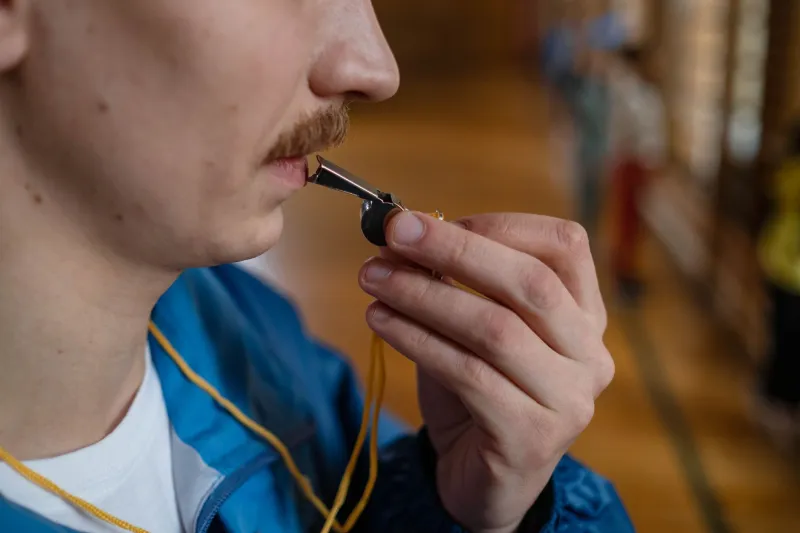
And then there's the sound that stops all the others. For decades, soccer referees signaled fouls by waving a handkerchief — until an 1890s English referee, Bryan Wall, was mobbed by an angry crowd after a disputed call and realized he needed something louder than fabric. He borrowed the whistle from London's police, and Joseph Hudson's "pea whistle" — with a small ball inside that gave it that piercing trill — soon became standard equipment worldwide.
No one ever had to ban the handkerchief. It just lost, completely, to a brass tube the size of a thumb.
The Pattern
Notice what these four sounds share: none was designed to become tradition. The organ was a lark, the horn a life-saving device, the Wave a bored crowd's game, the whistle a panic response to a riot. Each was treated as noise before it was recognized as culture.
That's how the soundtrack of American sports was really built — not by decree, but by disruption that outlasted everyone who tried to shush it.