When the Lights Went Out, Baseball Finally Saw the Future

The Night Baseball Lost Its Voice
On July 15, 1952, the Terre Haute Phillies were leading the Danville Warriors 7-3 in the bottom of the eighth inning when every light in Memorial Stadium went dark. The power failure wasn't just inconvenient—it was catastrophic. In an era before backup generators, losing electricity meant losing everything: field lights, concession stands, and most importantly, the scoreboard.
 Photo: Terre Haute, via assets.simpleviewinc.com
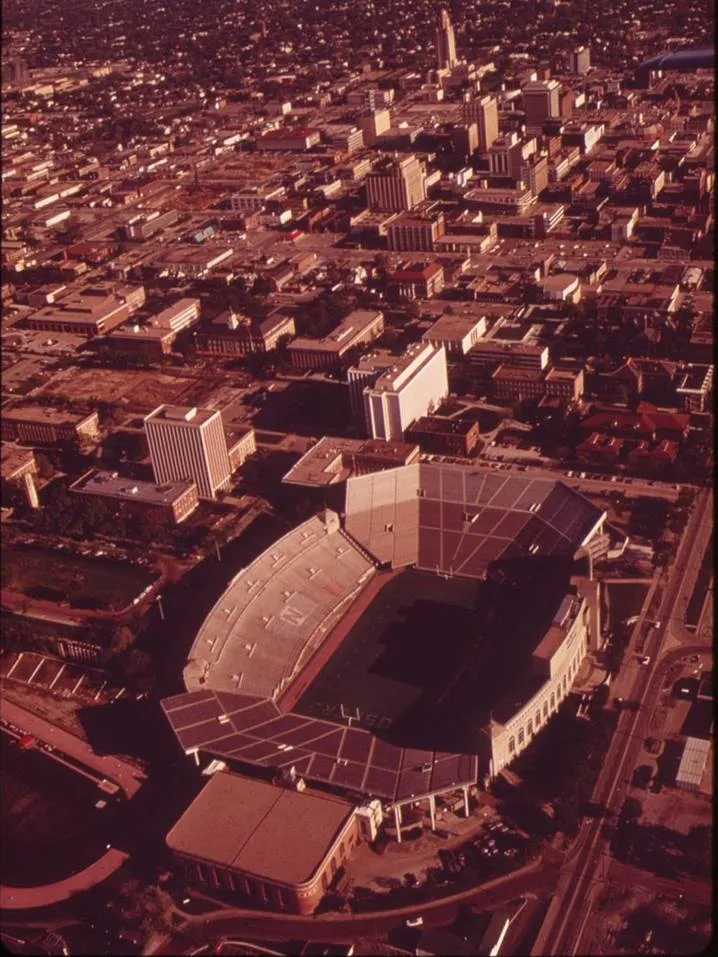 Photo: Memorial Stadium, via stadiumfreak.com
But this particular blackout would accidentally solve a problem that had plagued baseball for decades and finally settle a bitter patent dispute between two inventors who both claimed to have created the modern electronic scoreboard.
The Problem With Keeping Score
Before electronic scoreboards, tracking a baseball game was a labor-intensive nightmare. Most stadiums relied on hand-operated boards where workers manually hung numbered tiles or painted scores with chalk. The process was slow, error-prone, and often invisible to fans in distant seats.
Major League stadiums employed teams of scoreboard operators who communicated through an elaborate system of hand signals and speaking tubes. When a player got a hit, someone in the press box would signal the scoreboard crew, who would then locate the correct number tile and hang it in the appropriate slot.
The system was so cumbersome that many fans simply stopped paying attention to the official score, instead keeping their own tallies on paper scorecards.
The Rival Inventors
Two men claimed to have solved baseball's scoring problem, and their rivalry had been simmering for years by the time the lights went out in Terre Haute.
George Cahill, an electrical engineer from Chicago, had developed what he called the "Instantaneous Scoring System" in 1947. His design used a network of electric bulbs controlled by switches in the press box. Operators could change scores by flipping switches, causing different combinations of lights to illuminate numbers on the scoreboard.
Meanwhile, in Cincinnati, inventor Ralph Kiner (not the baseball player) had created a competing system he called "Electric Baseball." Kiner's design used electromagnetic relays to control mechanical number displays. His system was more complex but potentially more reliable than Cahill's light-based approach.
Both men had been trying to convince stadium owners to adopt their technology, but baseball's conservative culture resisted change. Most team owners saw electronic scoreboards as expensive novelties rather than necessary improvements.
The Terre Haute Test
Memorial Stadium in Terre Haute had been chosen as the testing ground for both systems. The Phillies' management, eager to modernize their facility, had installed Cahill's light-based scoreboard for the first half of the 1952 season. Kiner's electromagnetic system was scheduled for installation and testing later that summer.
The plan was to run both systems simultaneously for several weeks, then choose the better performer for permanent installation. It was the first head-to-head comparison of electronic scoreboard technologies in professional baseball.
But the July 15 power failure changed everything.
When Everything Failed
The blackout struck during a crucial moment in the game. With runners on second and third, Danville's cleanup hitter had just connected for what appeared to be a game-changing double. But in the darkness, nobody could see the scoreboard, the field, or even the players.
Stadium workers scrambled to restore power while fans used cigarette lighters and matches to illuminate their programs. The game was suspended for nearly two hours while electricians worked to identify the problem.
When power was finally restored, Cahill's light-based scoreboard was completely dead. The electrical surge that caused the blackout had blown out dozens of bulbs and damaged the control circuits. The system would require extensive repairs before it could function again.
The Electromagnetic Advantage
Here's where the accident became discovery: Kiner's electromagnetic system, which wasn't even supposed to be operational yet, had been connected to the stadium's electrical system for preliminary testing. When power was restored, his scoreboard immediately came back online.
The electromagnetic relays that controlled Kiner's number displays were designed to handle electrical fluctuations. Unlike Cahill's delicate light bulbs, the mechanical components could survive power surges and resume normal operation once electricity was restored.
More importantly, Kiner had included a battery backup system in his design—something Cahill's light-based approach couldn't accommodate. Even during the blackout, essential scoring information remained visible on Kiner's display.
The Demonstration That Changed Everything
With Cahill's system down for repairs, the Phillies completed the suspended game using only Kiner's electromagnetic scoreboard. For the first time, stadium officials could directly compare the old manual methods with modern electronic scoring.
The difference was dramatic. Score changes that previously took several minutes now appeared instantly. The clear, bright numbers were visible from every seat in the stadium. Most importantly, the system continued working reliably even when the stadium's aging electrical system experienced minor fluctuations.
Word of the successful test spread quickly through professional baseball circles. Within weeks, representatives from Major League teams were visiting Terre Haute to see Kiner's system in action.
The Technology That Won
Kiner's electromagnetic approach became the foundation for electronic scoreboards across America. The basic principle—using electrical signals to control mechanical displays—proved so reliable that it remained the industry standard for decades.
By 1960, most Major League stadiums had installed electronic scoreboards based on Kiner's design. The technology was eventually adapted for other sports, leading to the massive electronic displays that dominate modern arenas and stadiums.
Cahill's light-based approach wasn't forgotten entirely—it eventually evolved into the LED displays used in today's digital scoreboards. But in the 1950s, the technology wasn't robust enough for the demanding environment of professional sports.
The Accident That Accelerated History
The Terre Haute blackout didn't just settle a patent dispute—it accelerated the adoption of electronic scoring by demonstrating the technology's reliability under adverse conditions. Stadium owners who had been hesitant to invest in electronic systems suddenly saw them as essential infrastructure rather than optional upgrades.
Within a decade, manual scoreboards had largely disappeared from professional baseball. The labor-intensive process of hanging number tiles and painting scores was replaced by the simple flip of a switch.
The Modern Legacy
Today's massive video scoreboards trace their lineage directly back to that power failure in Terre Haute. The principle established by Kiner's electromagnetic system—that electronic scoring must be more reliable than manual methods—continues to guide scoreboard design.
Modern stadiums feature backup power systems, redundant displays, and fail-safe mechanisms that ensure scoring information remains available even during electrical emergencies. These safeguards exist because a minor league blackout in 1952 proved that reliability matters more than innovation.
The night the lights went out in Terre Haute, baseball accidentally discovered its electronic future. Sometimes the most important technological advances happen not when everything goes right, but when everything goes wrong.