The Phrase That Outlived the Man Who Shouted It
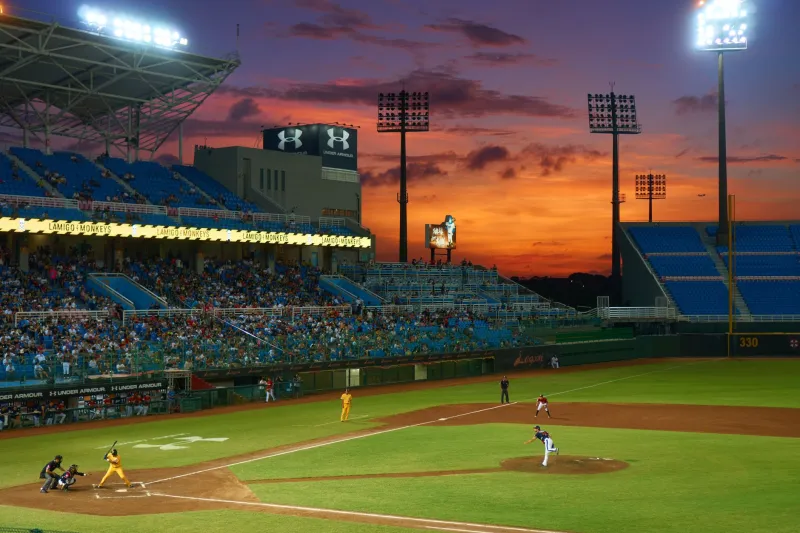
Here's a small puzzle worth thinking about: when's the last time you actually heard someone yell "Batter up" at a baseball game? Not in a movie. Not in a commercial for something that wants to seem all-American. At an actual game, in an actual stadium, from an actual person whose job it is to say things.
The answer, if you've been to a game recently, is probably never. Modern umpires don't announce the next batter. Public address systems handle logistics. The phrase has essentially retired from active duty. And yet it's everywhere — in headlines, in everyday speech, in the cultural vocabulary of a country that uses baseball metaphors the way other countries use weather talk. "Batter up" means something. It signals readiness, a new beginning, your turn in the spotlight. It just no longer means any of that at an actual baseball game.
How does a phrase survive its own obsolescence? That's a genuinely interesting question, and the answer starts in the noisy, chaotic ballparks of the nineteenth century.
Before Microphones, Someone Had to Yell
Early professional baseball was not a quiet experience. Crowds were rowdy. Vendors hollered. Brass bands played. And the game itself had no public address system, no jumbotron, no announcer's booth. Information moved through the stadium the old-fashioned way: someone with a loud voice and enough authority made noise until people listened.
Umpires in that era were genuinely theatrical figures. They didn't just make calls — they performed them. Calling the next batter to the plate was a practical necessity in a stadium where half the crowd might not know who was supposed to be hitting. Yelling "Batter up!" wasn't ceremonial. It was crowd management.
The phrase itself is believed to have entered common use sometime in the 1860s and 1870s, as the sport was professionalizing and standardizing its rules. The "up" in "batter up" mirrors the same construction you'd find in phrases like "next up" or "step up" — a shorthand for summoning someone forward. It's direct, percussive, and easy to hear over crowd noise, which is probably why it stuck.
The Announcers Who Made It Permanent
Radio changed everything about how Americans experienced baseball — and how baseball language spread. When broadcasters began calling games in the 1920s, they carried the vocabulary of the ballpark into living rooms across the country. Phrases that had lived only in stadiums suddenly became familiar to people who had never set foot in one.
Early baseball broadcasters leaned heavily into the theatrical tradition of the sport. Men like Graham McNamee, who called some of the first World Series broadcasts in the 1920s, understood that radio required painting a picture with words. The more evocative and specific the language, the better the listener could imagine the scene. Phrases like "batter up," "two down," and "the windup and the pitch" became the grammar of a new kind of storytelling.
By the time television arrived in the late 1940s and 1950s, that grammar was already deeply embedded. A generation of American kids had grown up hearing baseball on the radio, and the phrases had moved from the stadium to the schoolyard to everyday conversation. "Batter up" no longer needed to be said at games to stay alive — it had already escaped.
The Phrases That Didn't Make It
Not every piece of old baseball vocabulary survived the transition. Plenty of terms that were standard in nineteenth-century ballparks have completely vanished. "Muffin" (an unskilled player), "ace" in its original sense of the first pitcher in a rotation, and "cranks" (what fans were called before the word "fan" took over) all faded out as the game and its language evolved.
What separates the survivors from the forgotten? Utility, mostly. "Batter up" traveled because it was useful outside baseball. It described a moment of readiness, a transition, a call to action. The same goes for "stepping up to the plate," "out of left field," and "touching all the bases" — all baseball phrases that now do most of their work in offices and conversations rather than on diamond-shaped fields.
Language tends to keep what it can use. Baseball happened to generate a lot of phrases that mapped neatly onto everyday life, which is why Americans still talk like they're narrating a game even when they're describing a job interview or a business meeting.
What the Phrase Still Does
There's something almost poetic about the afterlife of "batter up." It began as a practical shout in a loud stadium, moved to the radio, spread across the country, and eventually settled into the cultural furniture — present everywhere, originating nowhere in particular in most people's minds.
When a politician says someone needs to "step up to the plate," or when a coach tells a nervous kid "you're up," they're drawing on a tradition that stretches back to muddy ballparks in the 1870s. They probably don't know that. They don't need to.
That's how language actually works. The origin disappears, and the meaning remains. The man who first shouted it into a rowdy crowd is long gone. The shout never stopped.