It Was Built to Shame Rich Drivers. Now It Runs Every City in America.
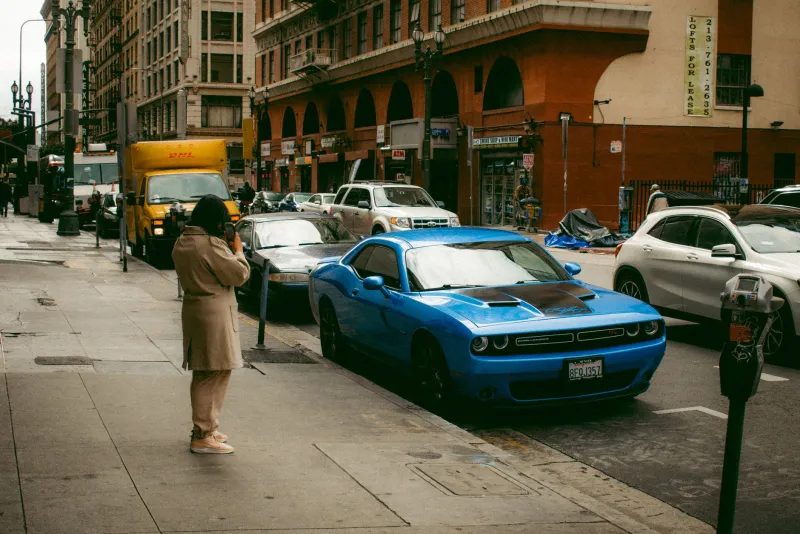
Every city in America has them. You've cursed at them. You've sprinted back to your car because of them. You've fed them quarters while muttering under your breath about whether this is really what democracy looks like. The parking meter is so woven into urban life that it feels like it must have always existed — a permanent feature of the American streetscape, as inevitable as traffic lights and crosswalks.
It wasn't always there. And when it first showed up, it wasn't designed to make money. It was designed to embarrass the wealthy.
Downtown Was a Parking Lot for the Well-Off
In the early 1930s, American cities were choking on cars. The automobile had arrived faster than anyone had planned for, and downtown commercial districts were discovering a problem that had no obvious solution: parking. Specifically, the fact that a small number of drivers — business owners, professionals, people with offices nearby — were leaving their cars on prime street space all day, every day, while shoppers and customers who wanted to visit stores couldn't find anywhere to stop.
The people hogging the spots weren't random. They were, almost uniformly, the better-off residents who worked downtown. They arrived early, parked in front of the best storefronts, and didn't move their cars for eight or ten hours. Meanwhile, a working-class family trying to run errands downtown circled the block fruitlessly and eventually gave up.
In Oklahoma City, this problem was particularly acute. The city's downtown business owners were watching sales stagnate while their best street spaces sat occupied by the same cars, day after day. A local newspaper editor and civic booster named Carr Asa Collins had been writing about the issue for years. He connected with a traffic engineer named Carlton Magee, who had an idea.
The Man With the Plan
Carlton Cole Magee was not a subtle man. He was a former newspaper publisher, a one-time political agitator who had been involved in exposing the Teapot Dome scandal, and a person who believed strongly in the power of systems to correct human selfishness. When the Oklahoma City Chamber of Commerce asked him to study the parking problem, he came back with something nobody expected: a coin-operated timing device to be installed at every street space, which would limit how long any single car could occupy a public spot.
The concept was explicitly framed as a fairness mechanism. Public streets, Magee argued, belonged to the public — not to whoever had the social standing to occupy them indefinitely. By requiring payment for time, the meter would effectively price out the all-day parkers and rotate the spots through more users. Rich or poor, your car had to move.
The first 150 Park-O-Meters — Magee had patented the design and formed a company to manufacture them — went into the ground on July 16, 1935, on the corner of First Street and Robinson Avenue in Oklahoma City. They charged a nickel an hour. The reaction was immediate and divided.
The Backlash Was Immediate
Business owners who had championed the idea quickly discovered that their customers hated it. Shoppers who had previously wandered downtown for an afternoon now watched the clock anxiously. The argument that the meters would improve access by rotating spots was hard to feel emotionally when you were the one feeding the machine.
Lawsuits followed. In several cities that adopted meters through the late 1930s, drivers challenged the legal right of municipalities to charge for public street space. Courts largely sided with the cities, reasoning that the meters were a traffic management tool, not a tax — a distinction that remains somewhat philosophical to anyone who's ever paid one.
The moral framing — meters as a weapon against parking privilege — faded quickly once city governments realized something else: the things made money. A lot of it.
When the Crusade Became a Cash Register
By the 1940s, the revenue angle had completely overtaken the equity argument. Cities weren't installing meters to shame wealthy parkers. They were installing meters to fund street maintenance, traffic departments, and general municipal budgets. The parking meter had transformed from a social engineering experiment into a revenue stream, and city planners embraced it accordingly.
The technology evolved steadily. Early meters were purely mechanical — springs and gears, no electronics. By the 1980s, digital displays arrived. The 1990s brought multi-space meters that served several spots from one unit. The 2000s introduced credit card readers. Today, many cities use app-based systems where the "meter" is entirely virtual — you pay on your phone, and sensors in the pavement track whether your car is still there.
The money involved is staggering. Major American cities collect hundreds of millions of dollars annually from parking revenue. New York City alone brings in over $500 million a year from meters, garages, and fines combined. Chicago famously leased its entire parking meter system to a private company in 2008 for $1.15 billion — a deal that has been almost universally described as a catastrophic mistake, since the city essentially sold future revenue for a fraction of its value.
What Carlton Magee Actually Built
Magee died in 1967, having lived long enough to see his invention spread to virtually every city in the developed world. Whether he'd have recognized what it became is another question. The parking meter he designed was a tool for redistributing public space more fairly. The parking meter that exists today is primarily a fiscal instrument — a way for cities to extract revenue from drivers while managing demand for limited space.
Both things are true simultaneously, which is what makes the parking meter such a strange piece of American infrastructure. It was born from a genuine argument about who public space belongs to. It survived by becoming something else entirely. And now it's so embedded in city life that nobody remembers it started as a moral statement.
Next time you're feeding quarters into one, you're participating in a nearly ninety-year-old argument about fairness that nobody finished having.