The Deaf Quarterback Who Accidentally Invented Football's Most Sacred Ritual
The Deaf Quarterback Who Accidentally Invented Football's Most Sacred Ritual
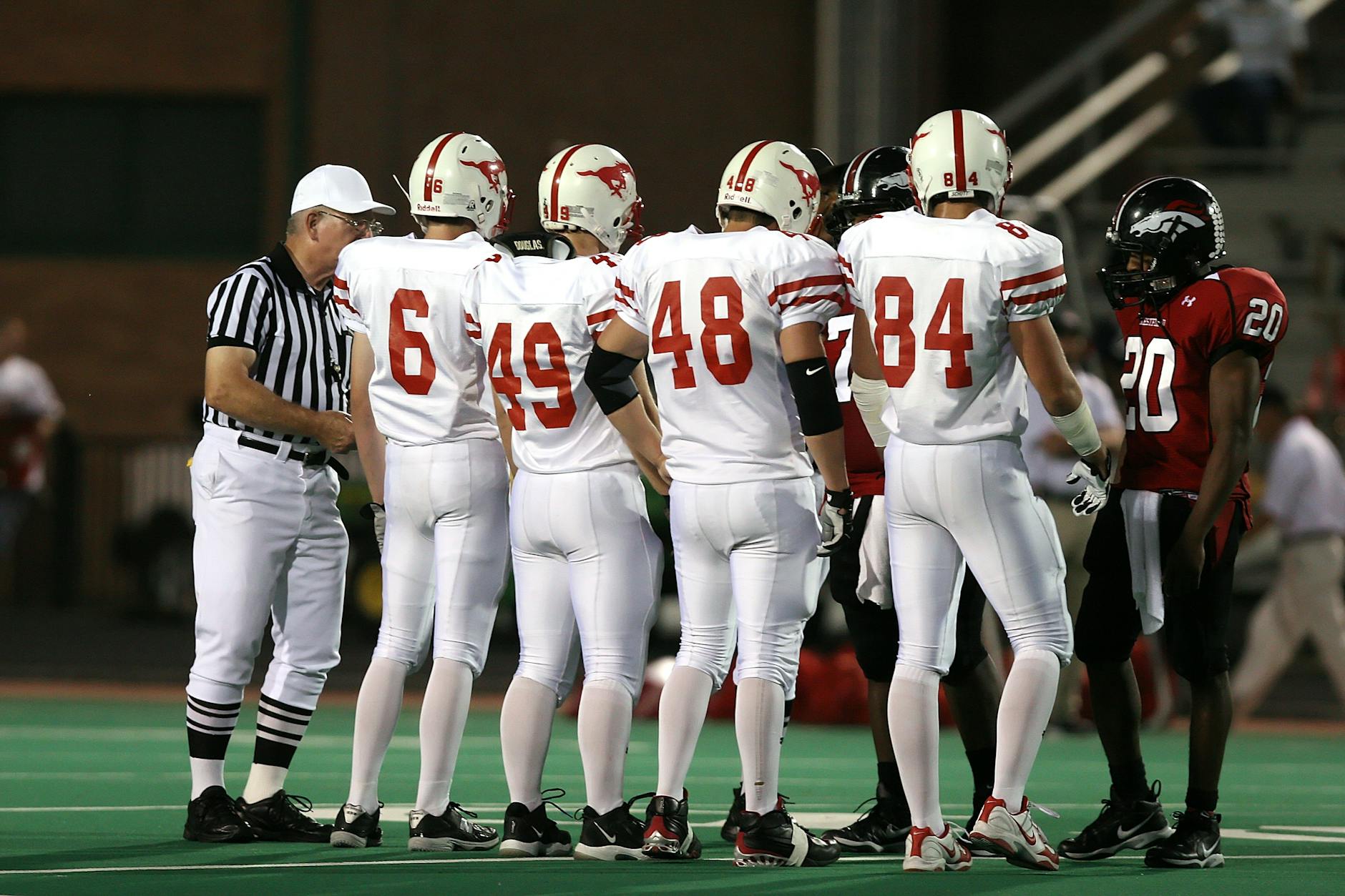
Before every play in American football, something happens that nobody questions. Players gather. They lean in. The quarterback talks, the group breaks apart, and the play begins. It's called the huddle, and it happens roughly 130 to 150 times per NFL game. Multiply that across high school fields, college stadiums, and backyard pickup games, and the huddle happens millions of times every single week in this country.
It feels ancient. Fundamental. Like football without a huddle would be like baseball without bases.
But the huddle isn't ancient. It was invented by one person, for one very specific reason, at a small university that most football fans couldn't find on a map. And the reason it exists has nothing to do with strategy — and everything to do with one quarterback's determination not to be spied on.
Gallaudet University and the Problem With Open Signals
In the 1890s, American football was still figuring itself out. The forward pass didn't exist yet. Helmets were optional. And teams communicated plays through hand signals — gestures made by the quarterback or a team captain that told players what to do before the snap.
For most teams, this worked fine. For the football team at Gallaudet University, it created a serious problem.
Gallaudet, located in Washington, D.C., is the world's only university designed specifically for deaf and hard-of-hearing students. Its football team in the 1890s was made up entirely of players who communicated through American Sign Language, and their quarterback — a man named Paul Hubbard — called plays using signed signals visible to everyone on the field.
Including the other team.
Opposing players started watching Hubbard's hands. They learned to read his signals well enough to anticipate plays before they happened. It was, essentially, the world's first sign-stealing scandal. And Hubbard needed to solve it.
The Circle That Changed Everything
Hubbard's solution was elegant and completely practical: if the other team couldn't see his hands, they couldn't steal his signals. So before each play, he started gathering his teammates into a tight circle, backs to the opposing players, where he could sign the play freely without anyone on the other side reading it.
That's it. That's the invention. A circle of players, facing inward, created not for drama or tradition but to block the sightlines of opponents trying to cheat.
The year is generally cited as 1892 or 1894, depending on the source. The place was Gallaudet's practice field. And the thing Paul Hubbard created in those moments — a closed, private communication space before each play — became one of the defining rituals of American football.
Hubbard never patented it. He never gave it a name. He was just a quarterback trying to protect his team's plays.
How the Huddle Spread
For the first couple of decades after Hubbard's innovation, the huddle wasn't universal. Many teams still called plays at the line of scrimmage, relying on coded language or signals made in the open. Football in the early 1900s was a rougher, more improvisational game, and there wasn't much standardization in how teams operated.
But as the sport grew — as forward passes became legal in 1906, as playbooks became more complex, as coaching became more sophisticated — the need for private, organized pre-snap communication became obvious. Coaches didn't want opponents hearing their play calls. Quarterbacks needed a moment to organize multiple players around a single assignment.
The huddle answered all of those needs at once. College teams adopted it through the 1910s and 1920s. The NFL, formed in 1920, saw it spread through its ranks over the following decade. By the 1930s, the huddle was essentially standard across American football at every level.
What began as one man's practical workaround had become the sport's central organizing ritual.
A Tradition That Carries More Than Plays
Here's the thing about the huddle that goes beyond its tactical function: it became something cultural. Something symbolic.
The huddle is where teams gather under pressure. It's where a quarterback steadies a rattled offense. It's where a coach's message gets delivered in the most direct way possible — player to player, face to face, ten seconds before everything gets chaotic. Sports psychologists have written about the huddle as a bonding mechanism, a moment of collective focus that reinforces group identity right before individual performance.
None of that was in Paul Hubbard's mind in the 1890s. He was thinking about blocking sightlines. But the form he created — the inward circle, the brief shared moment before action — turned out to carry meaning that went way beyond its original purpose.
The no-huddle offense, popularized in the 1980s and 1990s, is partly defined by what it removes — that pause, that gathering. Teams use it specifically to disrupt the other side's rhythm. Which tells you something about how much the huddle had come to mean: it became important enough that taking it away was itself a strategy.
The Story We Forgot to Tell
Paul Hubbard's name doesn't appear in most football histories. He's not in the Pro Football Hall of Fame. There's no trophy named after him, no famous play that bears his signature.
But before every snap in every game across America this weekend, players will form a circle, lean in, and share something private before the play begins. They'll do it without thinking about it. They'll do it because it's just what football looks like.
It looks that way because a deaf quarterback in Washington, D.C. needed to keep his hands hidden from the other team.
Every tradition starts somewhere. This one started with a problem, a circle, and a player who refused to let the other side see what was coming.