When There Was Nowhere Else to Go
Picture this: It's 1889, and the Harvard football team is losing badly at halftime. Their coach needs to fire them up, but there's one problem—locker rooms don't exist yet. So he does what coaches had been doing since the beginning of organized sports: he gathers his players in a circle on the muddy field, raises his voice above the crowd noise, and tries to change the course of history with nothing but words and determination.
That desperate moment on an open field would eventually become one of the most mythologized rituals in American sports. But the path from muddy desperation to modern motivation took a surprising route through architecture, psychology, and pure accident.
The Great Outdoors University
Early college football was nothing like today's polished production. Games were played on whatever field was available, often borrowed from other sports or carved out of unused campus land. Teams changed clothes in dormitory rooms, barns, or simply behind trees. The idea of a dedicated space for athletes was as foreign as the forward pass.
When halftime arrived, coaches faced a logistical nightmare. How do you motivate 20 young men when you're surrounded by thousands of spectators, opposing players, and curious onlookers? The answer was simple: you didn't worry about privacy. You gathered your team wherever you could find space and hoped your voice carried over the chaos.
These early "speeches" were more like battlefield commands than inspirational moments. Coaches shouted tactical adjustments, pointed out mistakes, and tried to rebuild confidence while standing in full view of everyone in the stadium. Privacy was a luxury they couldn't afford.
The Accidental Architecture of Inspiration
The first real locker rooms appeared in the 1890s, but they weren't built for halftime speeches. They were simple changing areas, designed to keep expensive uniforms clean and provide basic storage for equipment. The rooms were cramped, poorly lit, and smelled like wet wool and leather.
But something unexpected happened when coaches started using these spaces during halftime. The confined quarters created an intimacy that open fields couldn't match. Players sat on wooden benches, shoulder to shoulder, forced to make eye contact with their coach and teammates. The outside world disappeared, replaced by four walls and complete focus.
Coaches quickly realized they had stumbled onto something powerful. The same words that got lost in stadium wind and crowd noise suddenly carried weight in these small spaces. Whispers became more effective than shouts. Eye contact replaced gestures.
The Psychology of the Box
What early coaches discovered by accident, modern psychologists have since proven through research. Confined spaces create psychological pressure that enhances both attention and emotional response. When you can't escape, you listen differently. When you can't hide, you connect more deeply.
The locker room became a laboratory for human motivation. Coaches experimented with different approaches: some paced like caged animals, others sat quietly and spoke in measured tones. Some used chalkboards to diagram plays, others relied on pure emotion and personal connection.
Legendary coaches like Knute Rockne at Notre Dame turned these cramped spaces into theaters of inspiration. Rockne's halftime speeches became so famous that players from other teams would try to sneak close to Notre Dame's locker room just to hear what he was saying.
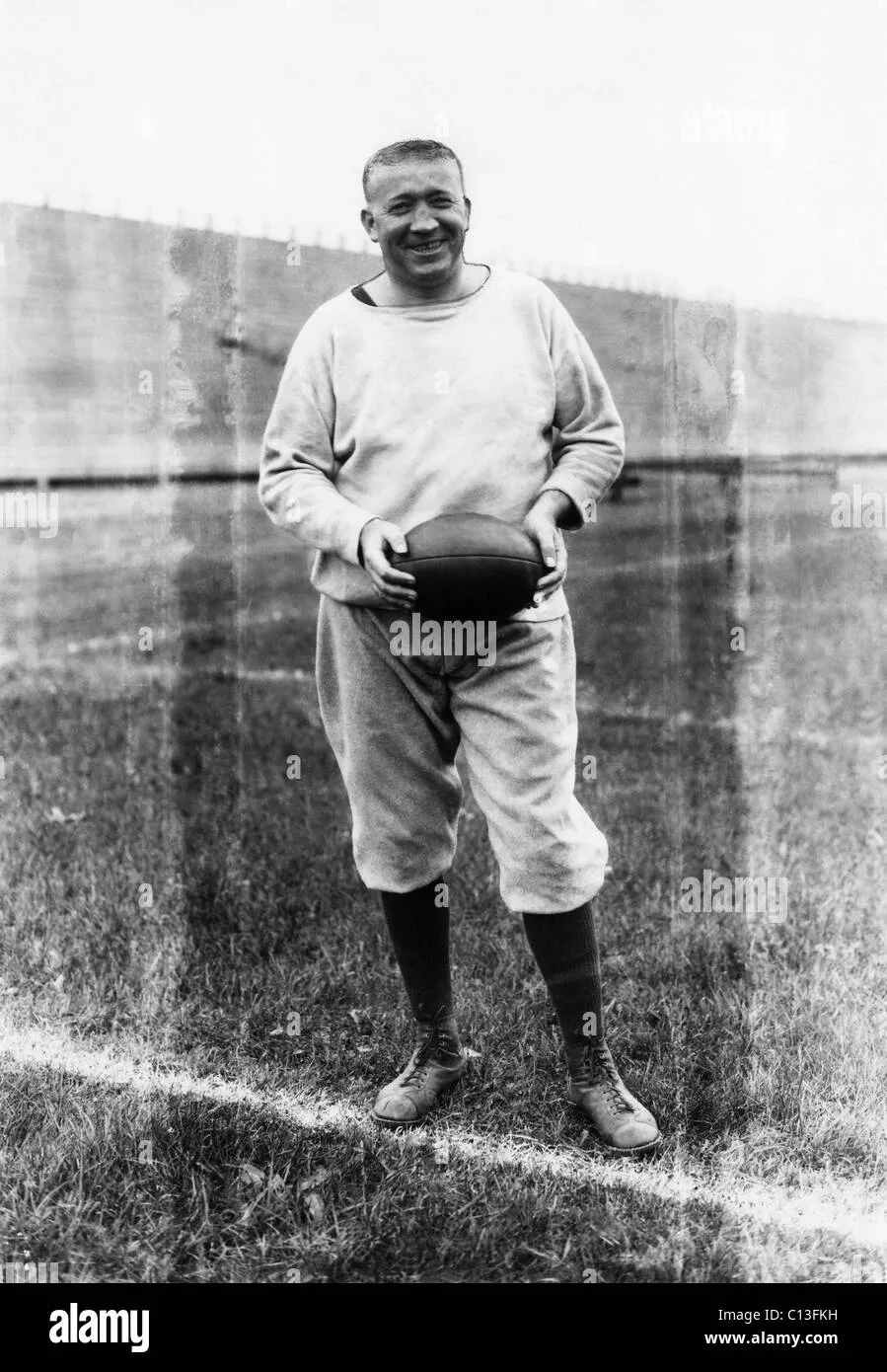 Photo: Knute Rockne, via c8.alamy.com
 Photo: Notre Dame, via img.budgettravel.com
From Rockne to Rock Stars
The mythology of the halftime speech exploded in the 1920s when sportswriters started documenting the legendary words spoken behind closed doors. Suddenly, what coaches said during those 15 minutes became as important as what players did during the other 45.
Rockne's "Win one for the Gipper" speech became American folklore, inspiring countless imitations and parodies. But the real power wasn't in the specific words—it was in the setting. The locker room had become a sacred space where ordinary coaches could become extraordinary leaders.
As sports grew more popular, the halftime speech evolved from tactical necessity to cultural phenomenon. Hollywood movies dramatized the moment, radio broadcasters speculated about what was being said behind closed doors, and fans began to believe that championships were won and lost in those private moments between halves.
The Modern Temple
Today's locker rooms bear little resemblance to those cramped changing areas of the 1890s. They're designed specifically for motivation, with carefully planned acoustics, strategic lighting, and enough space for dramatic gestures. Some feature video screens for tactical analysis, others include motivational quotes etched into the walls.
But the basic psychology remains unchanged. Coaches still gather their players in a confined space, still rely on eye contact and proximity to deliver their message, and still believe that the right words at the right moment can change everything.
The halftime speech has become so central to sports culture that it's hard to imagine the game without it. Yet this cornerstone tradition exists only because early coaches had nowhere else to go and accidentally discovered that the worst possible room for privacy became the best possible space for inspiration.
The Ritual That Built Itself
What makes the locker room speech so uniquely American is how it developed organically from pure necessity. Unlike many sports traditions that were planned and implemented, the halftime speech evolved naturally from the constraints of early athletics.
Coaches didn't set out to create a motivational ritual—they just needed somewhere to talk to their teams. The physical limitations of early facilities shaped the emotional intensity of the moment. The lack of space forced intimacy, the poor acoustics demanded passion, and the time constraints created urgency.
The Lasting Legacy
Every time a coach closes a locker room door at halftime, they're participating in a tradition that began on muddy fields where privacy was impossible and inspiration was desperate. The words may be different, the facilities certainly are, but the core remains the same: a leader trying to change the course of competition through the power of the spoken word.
The next time you hear about a legendary halftime speech, remember that this most American of sports traditions started not in a room designed for motivation, but in whatever space desperate coaches could find when they had nowhere else to turn. Sometimes the most powerful rituals aren't planned—they're simply what happens when necessity meets opportunity in the worst possible conditions.